Elegance and courage of the Escaramuzas: Inside charrería's women's outfits
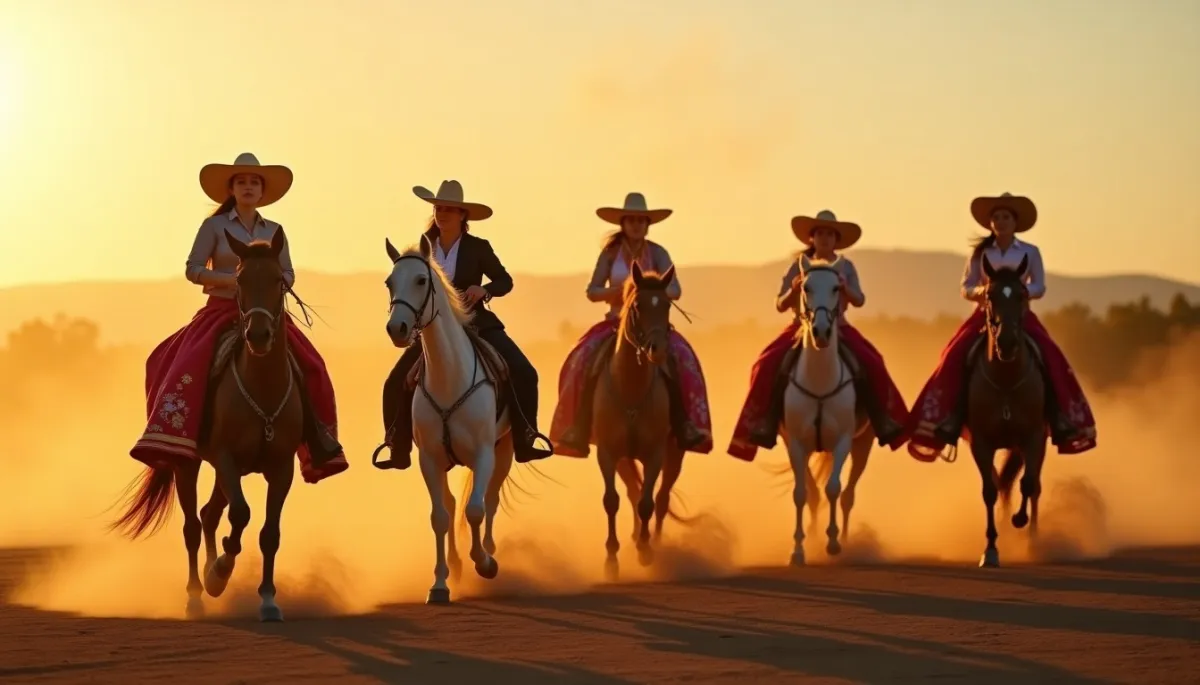
The Escaramuzas combine precision and poetry on horseback. Their dresses are not only costume, they are a history stitched in silk and courage.
🚀 Key Takeaways
- Key concept : Escaramuzas are all-female teams performing synchronized riding (charrería).
- Practical tip : To see them live, seek charreadas in central Mexico or local exhibitions at feria events, and compare with Camargue horse festivals.
- Did you know : The term "escaramuza" literally means a skirmish, a legacy of the Mexican Revolution and soldaderas.
They ride as one.
Imagine an earthen arena at sunset, dust rising in a slow cloud, the clip-clop of hooves in rhythm, and a circle of women in long, embroidered skirts guiding their horses sidesaddle, palm on rein and back straight. The silence before the first flourish, the murmur of the crowd, the flash of sequins—this is the moment the Escaramuzas turn technique into ballet.
Robe et ruse
The traje de las Escaramuzas blends protection and ornament. Skirts voluminous enough to create a silhouette on horseback, boleros and charra blouses embroidered with floral motifs, and wide-brimmed sombreros adapted to stay put during maneuvers. Each element has a purpose beyond beauty.
Riding sidesaddle (a technique called "a la brida") requires specific tailoring: reinforced seams, hidden slits, and a fitted corset to keep balance. The skirts are often weighted at the hem to avoid flapping, while accessories like rebozos (shawls) are both decorative and functional.
Behind the sequins, armor is psychological. The visual impact distracts, captivates, and affirms presence in a historically masculine arena. The costume is a statement: elegance and competence at once.
Racines partagées
The Escaramuzas trace their roots to the early 20th century. During the Mexican Revolution (1910-1920), women called soldaderas and "Adelitas" rode, tended to camps, and sometimes fought. Their visibility reshaped gender roles in rural equestrian culture.
Charrería itself emerges from colonial hacienda horsemanship, a practical stock-hand tradition that evolved into formal competition in the 20th century. Women gradually organized into teams, first informally within families, then as official escaramuzas in charreadas and regional festivals.
Today, teams across Mexico and the United States carry forward these practices, teaching young riders technical skills and transmitting embroidery techniques and oral histories, often in local clubs and cultural centers.
Jeu des contradictions
There is tension between tradition and innovation. Purists defend strict rules for maneuvers and costume, while younger escaramuzas introduce contemporary fabrics, safety gear, and new choreographies. The dialogue is ongoing.
Another contradiction: visibility brings prestige but also risk. Performing publicly increases recognition and opens pathways for scholarships and international exchanges. At the same time, it exposes riders to scrutiny and to the challenge of maintaining authenticity under commercial pressure.
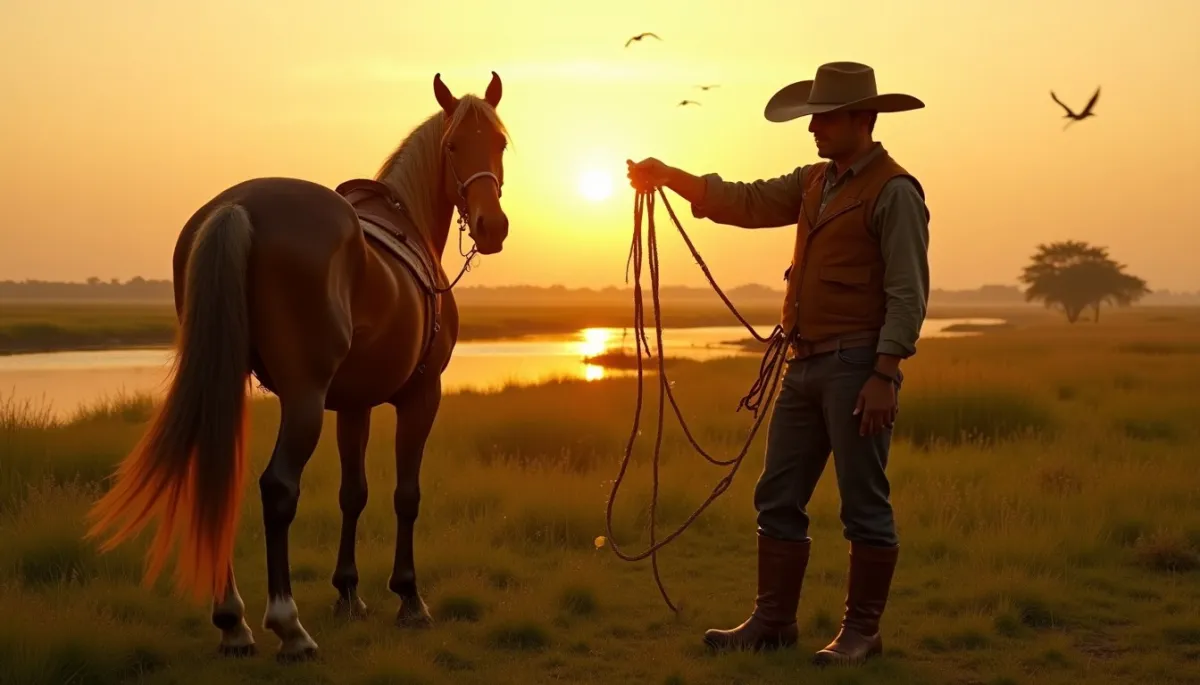
For travelers in the Camargue, parallels are striking. The gardian of the marsh and the charro both cultivate a close bond with the horse, a regional costume, and seasonal festivities. Observing an escaramuza invites noticing how mounted traditions adapt to identity, place, and modern safety standards.
Conseils pratiques
If you want to approach this world, start by learning vocabulary: "charrería" for the sport, "escaramuza" for the team, "charro/charra" for the male/female rider attire. Respectful curiosity opens doors to clubs and workshops.
When attending a charreada, favor early bookings at regional ferias in states like Jalisco, Zacatecas or Hidalgo. Bring sun protection and a camera with fast shutter speed to capture fleeting formations.
Finally, listen to elders. The oldest riders often know stories of grandmothers who sewed costumes by hand, of horses rescued from floods, and of the little rituals that make each team unique. Those anecdotes are the true embroidery of the tradition.