The facón knife: the Gaucho's multipurpose blade
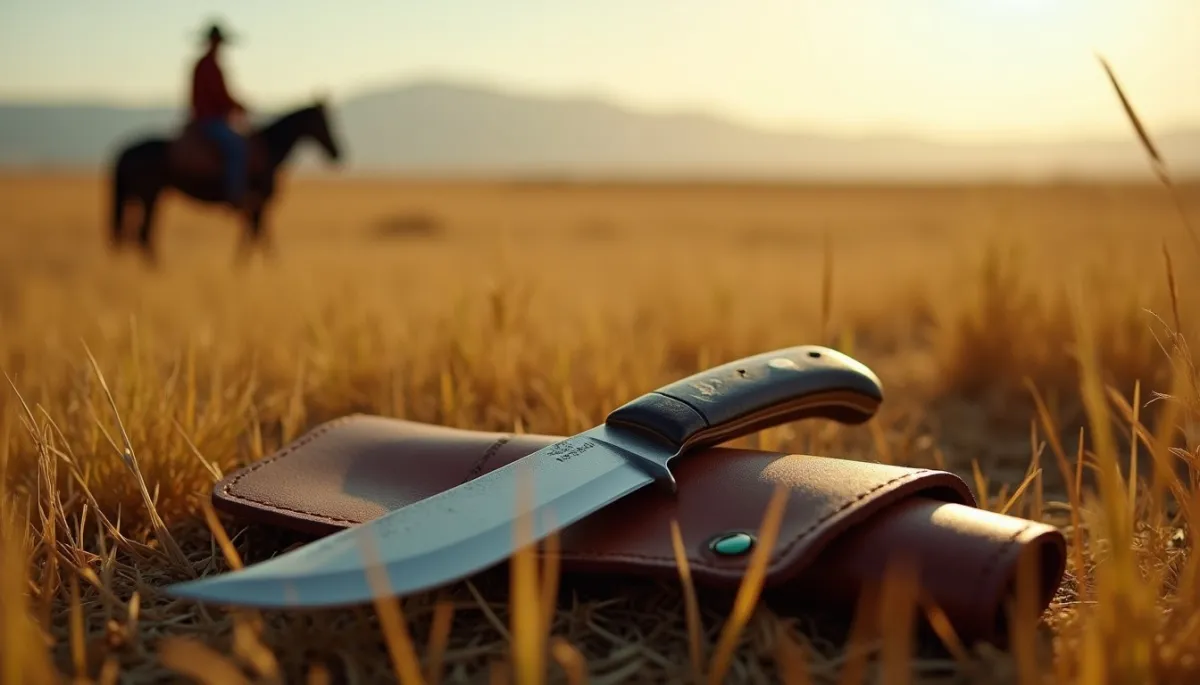
The facón is more than a tool, it is a witness of the pampas. From 19th-century duels to present-day festivals, this knife shaped the life of the gaucho.
🚀 Key Takeaways
- Key concept : The facón is a long knife used by Argentine gauchos as weapon, tool and symbol.
- Practical tip : Choose a facón with a comfortable hilt and leather sheath; blades usually range between 25 and 40 cm.
- Did you know : The facón blends Iberian knife traditions, and appears in José Hernández's epic Martín Fierro (1872).
It cuts a silhouette against the endless grass. Imagine a gaucho at dusk, poncho folded, horse breathing clouds in the cold air, a facón tucked at his waist catching the last light while he readies a mate and readies the evening work.
Blade and legend
The facón is first of all a blade: long, singular, and practical. Typical lengths are variable, often between 25 and 40 cm, with single-edged or slightly concave profiles adapted to cutting and slicing.
Materially, traditional facónes used carbon or high quality steel, with handles of wood, bone or silver for wealthier owners. Many sheaths were hand stitched leather, worn horizontally at the back of the belt or under the poncho for quick reach.
Culturally, the facón became an emblem. It appears in 19th-century literature and folk songs. José Hernández mentions the gaucho's tools in Martín Fierro (1872), and contemporary chroniclers note its role as a daily instrument and a marker of identity across the pampas.
Roots and reasons
The facón is the product of Iberian knife traditions meeting the needs of the South American plains. The Portuguese "faca" and the Spanish navaja influenced its shape and use; from the late 18th century and throughout the 19th, itinerant vaqueros adapted these forms to life on the pampas.
Gauchos were horsemen and cattle workers across Argentina, Uruguay and southern Brazil. Their work required a versatile blade: dressing meat, preparing food, repairing tack, and occasional veterinary tasks on the field. The facón answered all these demands, and its ubiquity came from necessity as much as taste.
Historical moments shaped its spread. During the era of Juan Manuel de Rosas (1829-1852), rural militia and frontier life reinforced the practical and defensive use of the knife. In cities like Buenos Aires and Montevideo, urban authorities sometimes clashed with rural customs, yet the facón remained in daily life and ritual.
Tensions and revival
Carrying a facón also had consequences. In the 19th century, disputes and "knife fights" were part of the social landscape on frontier towns, and the facón acquired a reputation as an instrument of personal honor. Records and newspapers from provincial towns document episodes where the knife played a tragic role.
Today, this double nature — tool and weapon — raises modern questions. Many countries regulate the public carry of large knives, while artisans and collectors emphasize craftsmanship and history. Facónes are now exhibited in museums, worn at folkloric events, or produced by contemporary bladesmiths who reinterpret classic forms.
For travelers and collectors, a few practical notes: prefer a well-balanced blade, check the legality of carrying edged tools where you live, oil carbon blades to prevent rust, and favor a solid leather sheath. In Camargue, gardians perform similar gestures, carrying knives to tend bulls and horses, a parallel that links two horseback cultures separated by oceans but close in function and respect for the tool.