Gardian huts of the Camargue: traditional architecture facing climate challenges
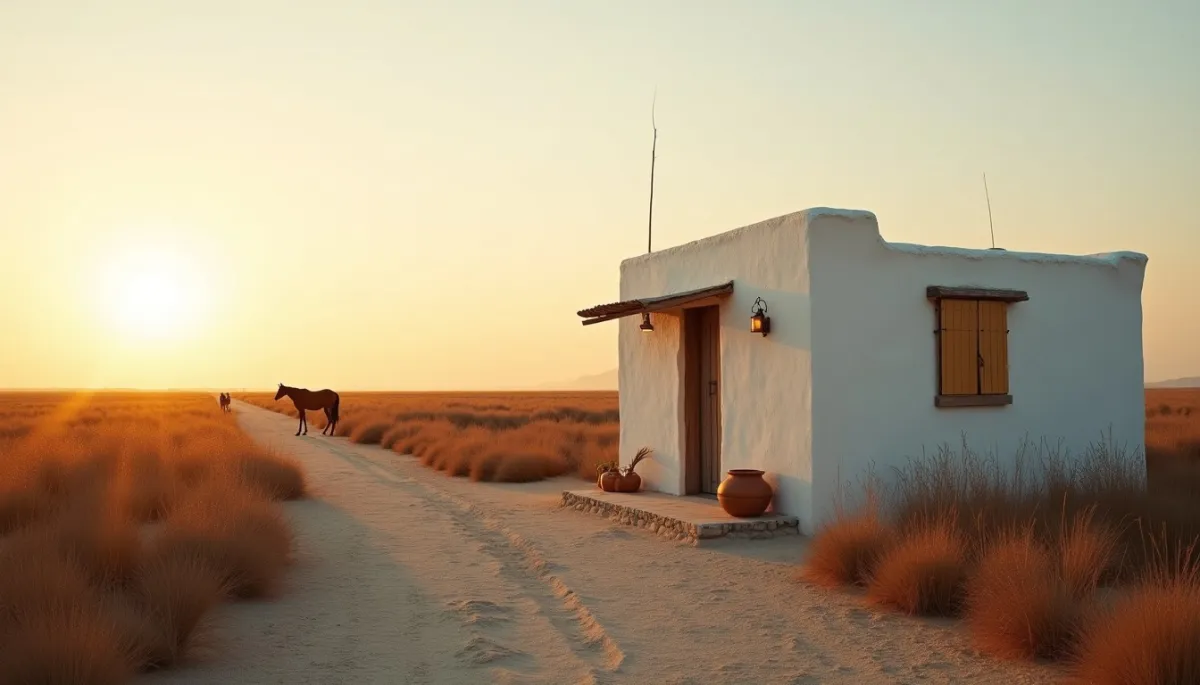
In the salt light of the Camargue, low white cabins punctuate marshes and manades. These cabanes de gardians embody a working equestrian culture under pressure from changing weather and rising seas.
🚀 Key Takeaways
- Key concept : Cabanes as vernacular shelters for gardians (Camargue cowboys) with simple, local materials.
- Practical tip : Limewash, raised foundations and rainwater harvesting help preserve cabanes.
- Did you know : The Camargue's pastoral landscapes are protected since the creation of the regional park in 1970, but cabins remain vulnerable.
Small, sun-bleached and stubbornly horizontal.
Picture a narrow lane of compacted earth, salt smell in the air, and a low white cabane with a small blue shutter. Nearby, gardians saddle Camargue horses at dawn, while cattle move slowly through the reedbeds. The cabin’s thick walls hold the cool from the night; a clay jar and a rope of horsehair hang by the door. This is both shelter and workshop, a marker of place more than a house.
toits et murs
The cabanes de gardians are first of all pragmatic. Traditionally built with materials at hand — limestone or mud-brick, reed thatch or terracotta tiles, and a lime-based whitewash — they prioritise shade, inertia thermique (thermal mass) and simplicity. Windows are small to limit heat in summer and cold draughts in winter.
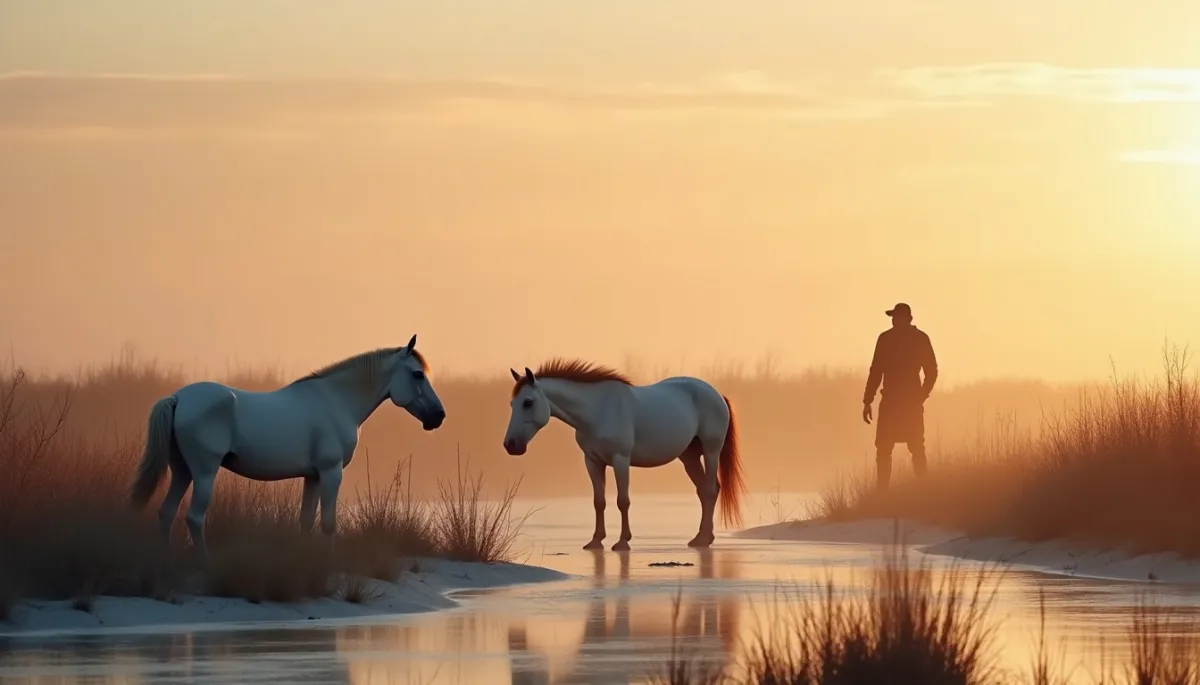
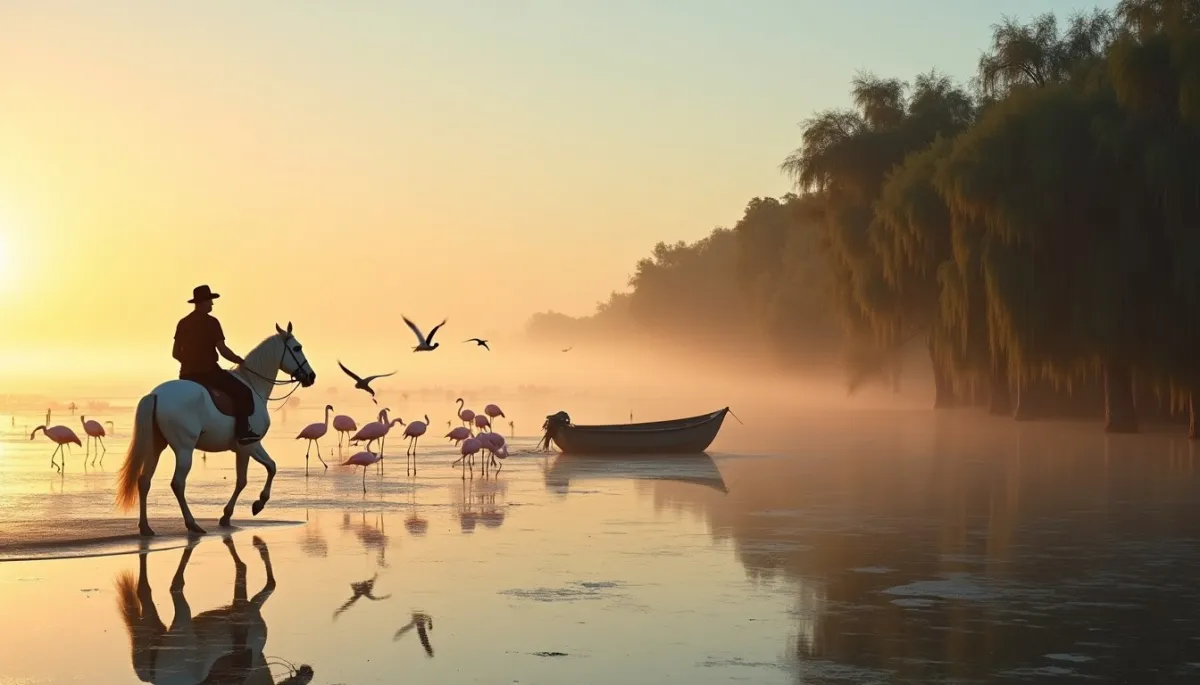
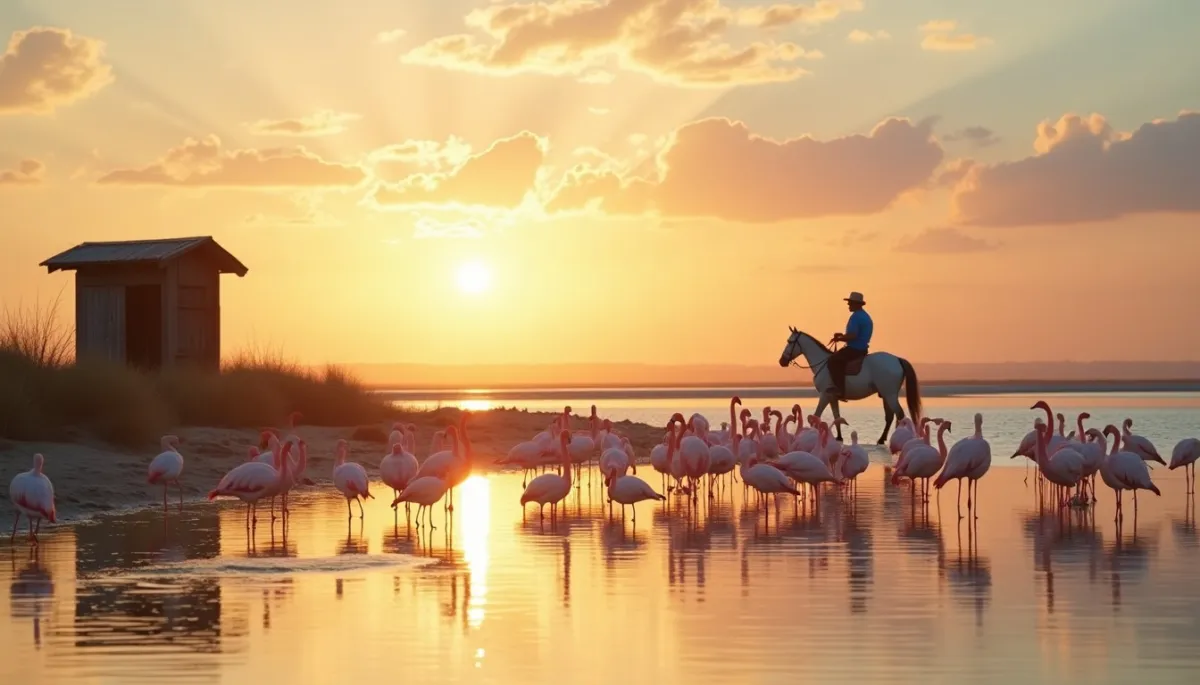
These constructions served the manades (extensive herds of Camargue cattle and horses). A gardian could sleep in a cabane for months during pasturage, keep tack and tools there, and shelter injured animals. In Saintes-Maries-de-la-Mer and around Arles, photographs from the 1930s and 1950s show identical low profiles, confirming a continuity of form linked to function.
Architecturally, cabanes vary by micro-region: some have flat stepped roofs to collect rain, others a simple pitched tile roof. They are vernacular architecture — that is, built by and for local people without formal plans — which explains their diversity and robustness over centuries.
eau et sel
Why do these cabins matter now? Because the Camargue sits at a dynamic interface: Mediterranean weather, river Rhône flows, and tidal influence. The last decades have seen two trends amplify risks. First, rising sea levels and storm surges increase salinization of soils. Second, more extreme rainfall events alternate with longer dry spells, stressing foundations and basic materials.
Gardiens and manadiers report damage that used to be rare: salt-laden winds peeling limewash, timber rot from prolonged humidity, and floorboards warped after unusual flooding in autumn storms. Local authorities cite the regional park (established in 1970) and coastal planning laws (notably the 1986 law on the littoral) when balancing preservation and adaptation, but practices on the ground remain largely artisanal.
A concrete anecdote: after a violent storm year, several small cabanes near the Vaccarès lagoon required their owners to raise floors and replace reed roofs with tiles. These ad hoc repairs show resilience, but also growing maintenance costs for families who keep manades alive.
adaptations héritées
Against this backdrop, solutions blend tradition and modern techniques. The simplest: regular limewashing (reapplying white lime) protects masonry from salt and UV, while allowing the walls to breathe. Elevated stone plinths protect timber sills from capillary rise. In several mas (farms) around Cacharel and Mas du Pont, owners have re-used old bricks and raised thresholds by 20 to 30 centimetres to limit moisture ingress.
Modern adaptations include discreet insulation, breathable mortars, and photovoltaic panels for remote power. Rainwater harvesting tanks under eaves provide water for washing and for horses, reducing dependence on saline groundwater. Landscaping matters too: planting tamarisk or poplars as windbreaks reduces salt spray and softens storms.
There are institutional levers as well. Local conservatories and the Parc naturel régional de Camargue promote heritage repairs that respect traditional techniques, sometimes co-financing works for protected mas. For gardians, maintaining a cabane is both cultural duty and practical necessity: it preserves a way of life recognized in the region’s festivals, from the Arles feria to the Saintes-Maries procession where gardians still lead the bulls and horses.
Advice for visitors and new owners: document existing materials before any intervention, prefer breathable mortars to modern cement, and consult local craftsmen (maçons and couvreurs) experienced with lime and reed. These measures keep cabanes alive, functional and in harmony with the marsh they serve.
In the end, cabanes de gardians are a living dialogue between human work, animals and elements. Their survival will depend on modest repairs, shared knowledge, and policies that favour small-scale adaptation over generic coastal redevelopment. Walk past one at dusk and you still read an entire pastoral geography in its whitewashed shadow.