Gardians of Camargue: Heritage in the saddle
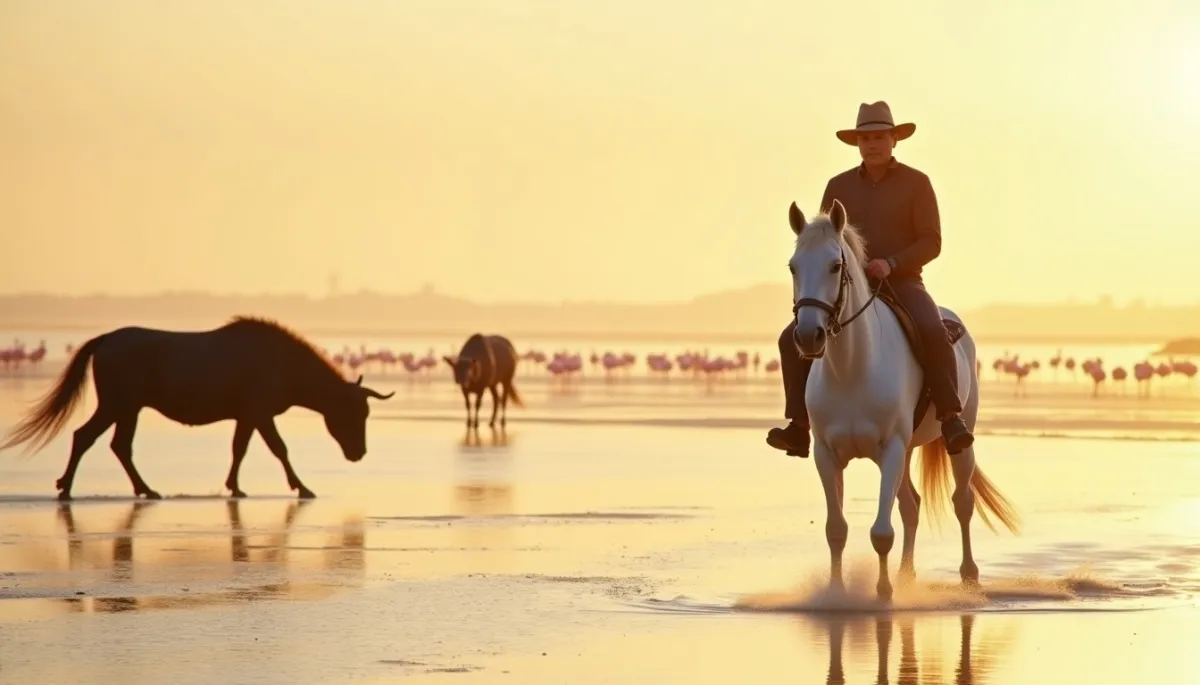
The gardians of Camargue still ride at dawn, channeling a European cowboy legacy across marsh and salt. Between pilgrimage, feria and manade, they keep an animal culture alive, stubborn and poetic.
🚀 Key Takeaways
- Concept key : Gardians are the mounted herders of Camargue, guardians of manades (herds) and local traditions.
- Practical tip : Visit a manade in spring, attend an abrivado at the Feria d'Arles, and respect the animals and riders.
- Did you know : Camargue horses are small, often grey-white, bred for agility in marshy terrain; flamingos and bulls share the same landscape.
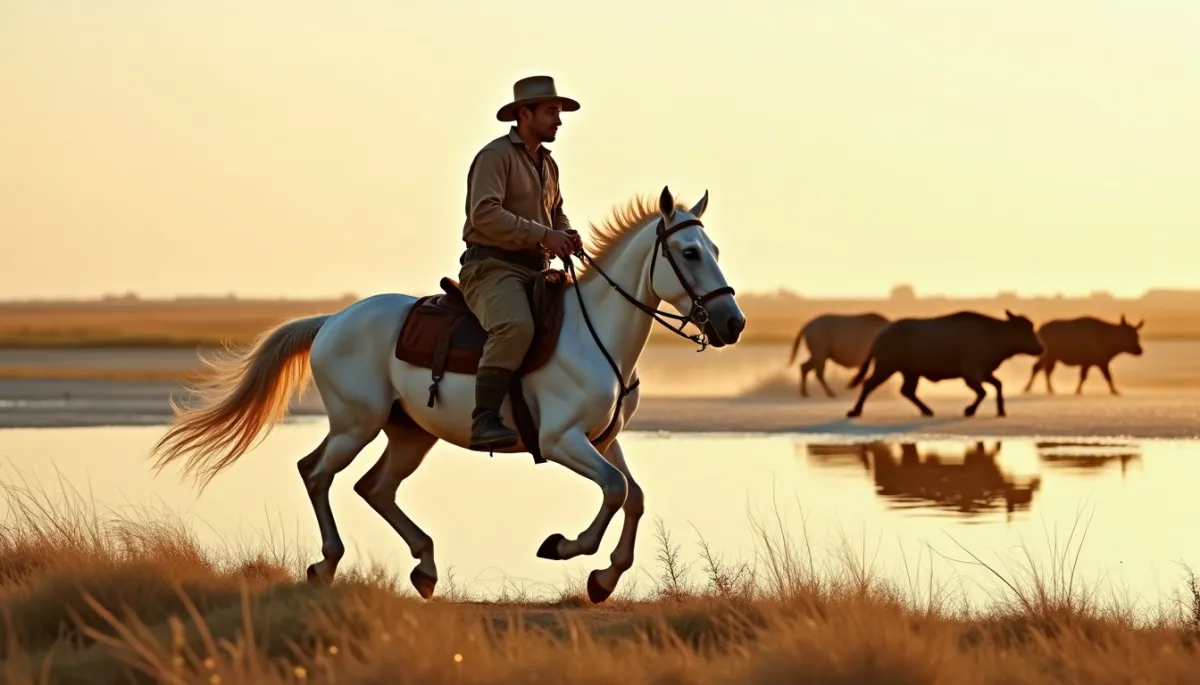
A sunrise that smells of salt and wild grass. Riders silhouette against a mirror of water, a white horse's breath steaming in cool air.
The gardian is the emblem of the Camargue, that triangular delta of the Rhône in southern France. Mounted on the compact Camargue horse, he (or she) conducts the manade, a semi-wild herd of black bulls used in local festivities and in the traditions of Provençal bull handling. Scenes like this still happen every morning, especially around Saintes-Maries-de-la-Mer and the marshes near Arles.
Chevauchée camarguaise
Gardians are not actors in a costume. They are professional herders, manadiers and riders whose daily work is tending cattle, maintaining the land and training horses. The word manade designates both the herd and the operation that manages it. Visiting a manade reveals fences, salt pans, and low huts where tack is hung and young horses are broken in.
Camargue horses are small, sturdy and white or grey. They adapt to salt meadows and shallow marshes. Their agility is essential during an abrivado, the running of bulls through town streets where gardians escort bulls to the arena. These traditions animate the Feria d'Arles around Easter and Pentecost, and the great festivities of Saintes-Maries-de-la-Mer each May.
An emblematic figure of the 20th century, Folco de Baroncelli promoted Camargue identity and revived local customs in the early 1900s. He helped institutionalize the manade and the image of the gardian, using literature and festivals to protect a way of life threatened by modernization.
Terre et geste
The consequences of this heritage are tangible. The Camargue landscape is shaped by grazing: marshes maintained by livestock, reed beds trimmed by horses, salt flats left open by traditional management. Biodiversity benefits when manades roam; flamingos, herons and egrets coexist with cattle in the reed beds.
Tourism follows. Each year, thousands come for the ferias, for horseback trails across salt marshes, and to meet manadiers who open their gates. Local economies depend on this mix of agriculture and cultural events. A sustainable manade is both a working farm and a living museum of rural knowledge.
Practical consequences include seasonal rhythms: spring foaling, summer grazing, autumn and winter maintenance. Visitors should time visits accordingly. Spring and early summer are best to witness foals and active herding; fiesta weekends show the bulls and riders in their most public roles.
Origines partagées
How did this tradition survive? The causes are a blend of geography, history and human choice. The Camargue's marshes offered a niche where small, hardy horses and black bulls thrived. Centuries of pastoralism created techniques and social roles adapted to wetlands.
Spanish and Provençal influences mixed here. The Vaquero and the rodeo of the Americas are cousins of the gardian tradition. When the Crown of Aragon and later Spanish cultural currents touched Provence, mounted cattle handling introduced tools and gestures that converged with local practices.
From the late 19th century, intellectuals and local leaders like Folco de Baroncelli promoted the Camargue identity. They set up festivals, codified practices, and defended the manade against land reclamation and industrial projects. This cultural mobilization helped preserve the landscape and the métier.
Sur le fil
Yet contradictions persist. Modern pressures push for tourism, real estate and intensive agriculture, which can conflict with extensive grazing. Some manades have adapted by opening to visitors, offering horseback rides and staged abrivados, a compromise that raises questions about authenticity.
Animal welfare and conservation add layers. Organizers must balance spectacle with respect for bulls and horses. French laws and local charters increasingly regulate festivities, veterinary care and animal handling, transforming old habits into codified protocols.
There is hope in hybrid solutions. Cooperative manades, eco-tourism, and educational visits reconcile income needs and conservation. For the visitor, the advice is simple: choose respectful operators, avoid provocative behaviour near animals, and learn local etiquette. Wear comfortable boots, bring a hat, and listen to the gardians who know their land intimately.
Camargue's gardians are a living link between European pastoralism and the global image of the cowboy. Their rides across salt marshes, their rituals at feria, and their daily care for horses and bulls create a fragile, beautiful culture. To see them is to witness an inheritance kept in the saddle.