Gipsy pilgrimage to Saintes-Maries-de-la-Mer: faith, horses and guitars
Every late May, the small Camargue town of Les Saintes-Maries-de-la-Mer becomes a sea of colour, music and horses. The Roma pilgrimage, centred on Saint Sara, mixes devotion, equestrian spectacle and flamenco in a unique celebration.
🚀 Key Takeaways
- Key concept : Annual Roma pilgrimage around May 24-25, honouring Saint Sara.
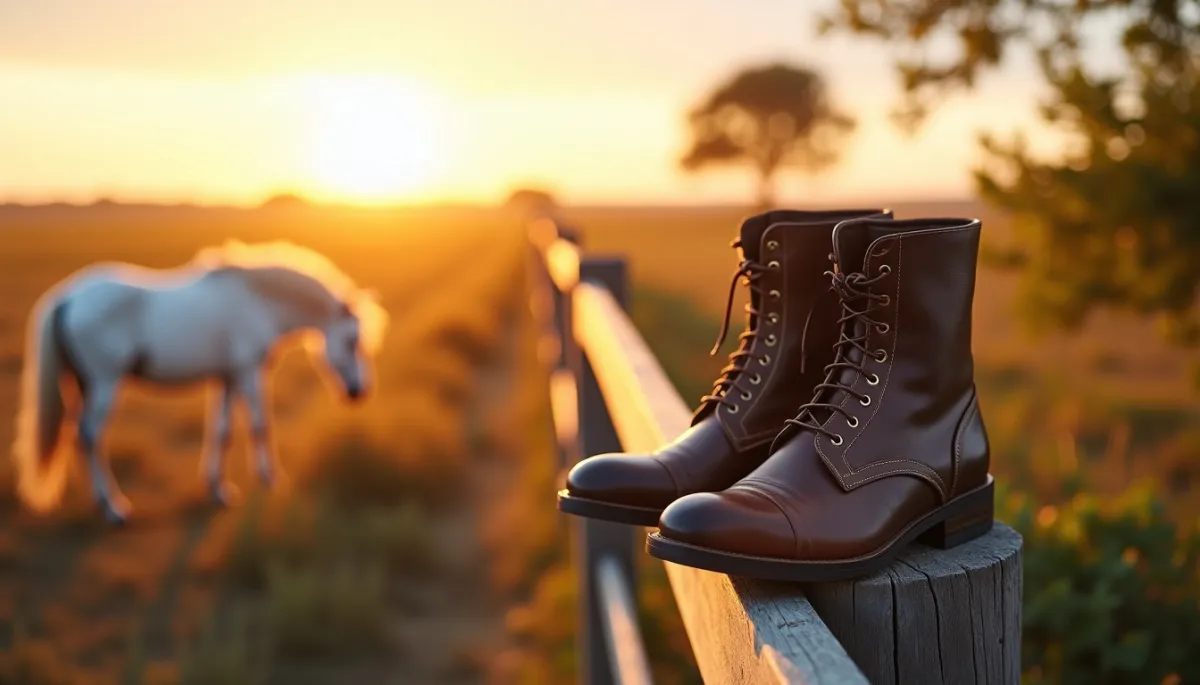
- Practical tip : Arrive early, bring boots, and ask before photographing pilgrims.
- Did you know : Horses of the Camargue and local gardians lead the sea procession, a striking visual echo of frontier riders.
Dust, guitars and the thunder of hooves.
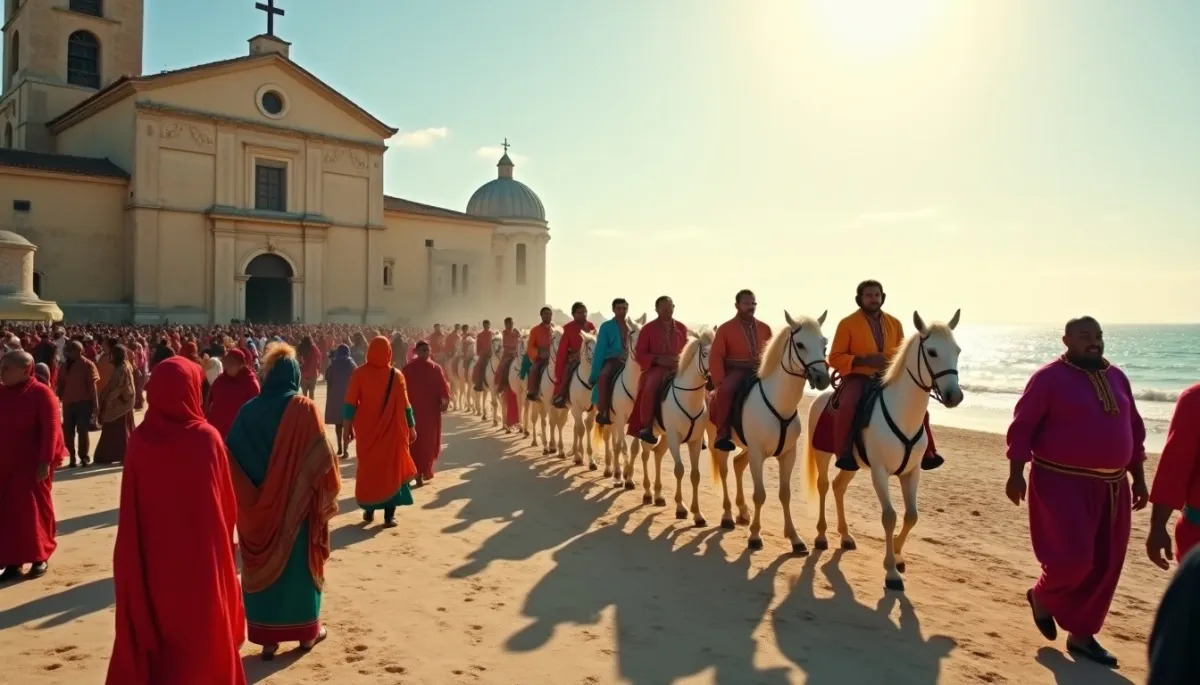
On the esplanade before the fortified church, women in colourful skirts press close to the crypt, men with weathered faces strike rythms on cajóns, and gardians lead white Camargue horses toward the beach. The air smells of sea salt and incense, voices sing in Caló and Spanish, and the statue of Sara la Kali waits for the procession to the sea.
Roots and ritual
The pilgrimage gathers Roma from Spain, Portugal, France and beyond. The heart of the event is the veneration of Sara la Kali, a figure regarded by many Roma as their patron saint. The dates are fixed around May 24 and 25, the feast days that draw thousands to this little port in the Camargue.
Inside the church of Notre-Dame-de-la-Mer, a Romanesque edifice partly fortified, pilgrims file to touch the statue and leave votive offerings. The ceremony blends Catholic liturgy with Roma customs: songs in Caló, offerings of flowers and the exchange of blessings.
Outside, the procession to the sea is the most photographic moment. Mounted gardians, often in traditional attire, lead a parade of riders and decorated caravans. Horses enter the shallows as the statue of Sara is blessed, a symbolic immersion that seals the vow of protection.
Music and horses
Guitars and palmas (hand claps) rise with the tide. Flamenco elements and Romani songs punctuate masses and camps. Figures such as the guitarist Manitas de Plata helped bring international attention to Roma music in the 20th century, and itinerant musicians still play nightly in the lanes.
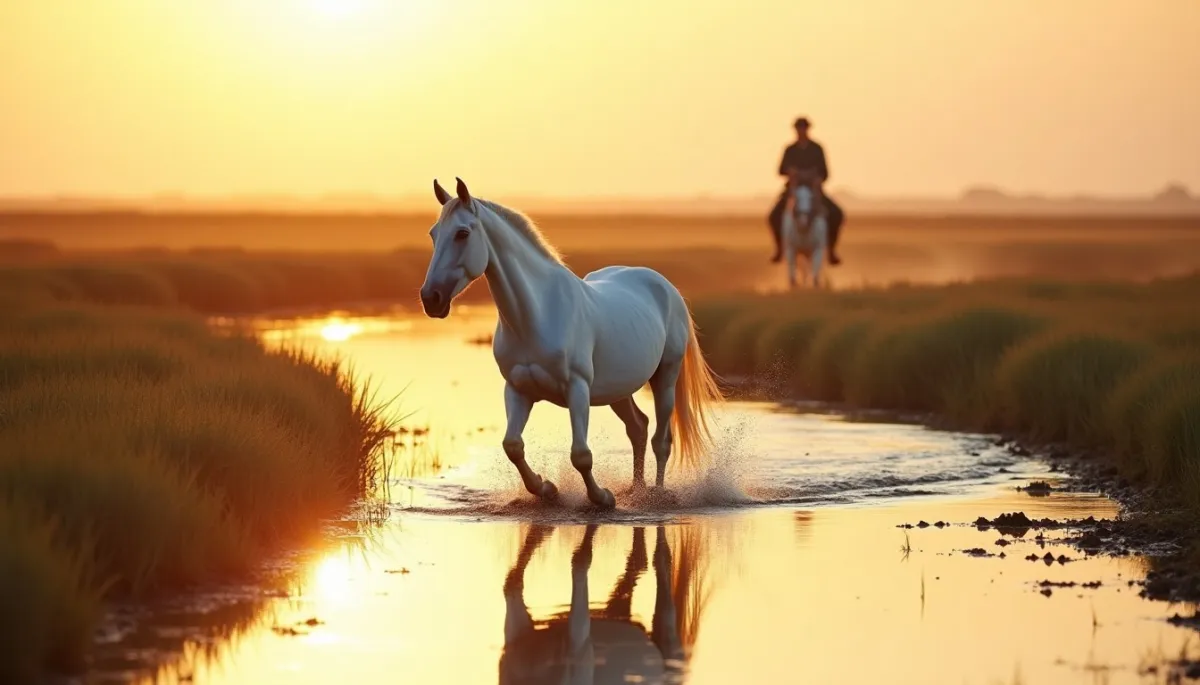
The Camargue horse is as much a character as any pilgrim. Small, robust and white, these horses are handled by gardians whose work recalls American cowboys and Latin American gauchos. The spectacle of horses running into the sea is both a blessing and a demonstration of trust between rider and mount.
Photographers should note that many Roma view images as personal. A polite request and a small conversation open doors; otherwise respect and distance are the rules. The best listening spots are the esplanade and the beach at dawn.
Heritage and challenges
The pilgrimage is a living tradition, but it faces modern pressures. Tourism has grown since the 20th century, bringing economic benefits and risks of commodification. Local authorities balance security and respect for rites, especially during peak days.
Cultural recognition has improved, yet stereotypes persist. The pilgrimage is also an opportunity for cultural exchange: workshops, exhibitions and flamenco evenings help explain Roma heritage to visitors.
Practical advice for a meaningful visit: book ahead in May, favour small guesthouses, carry cash for local stalls, and learn a few respectful phrases. Most important, come with curiosity and humility, ready to listen to a tradition that links sea, horse and song in the Camargue landscape.