Karoo cowboys: ranching and survival in South Africa's semi-desert
The Karoo is a place that tests you, and often shapes you. From 19th-century wool empires to 21st-century drought strategies, its ranchers reinvent survival.
🚀 Key Takeaways
- Core concept : The Karoo is a semi-desert region where sheep farming and resilience tactics shape local life.
- Practical tip : Rotational grazing and hardy breeds (Dorper, Merino variants) reduce vulnerability to drought.
- Did you know : Olive Schreiner set her 1883 novel "The Story of an African Farm" in the Karoo, capturing its stark beauty.
Dust and horizon.
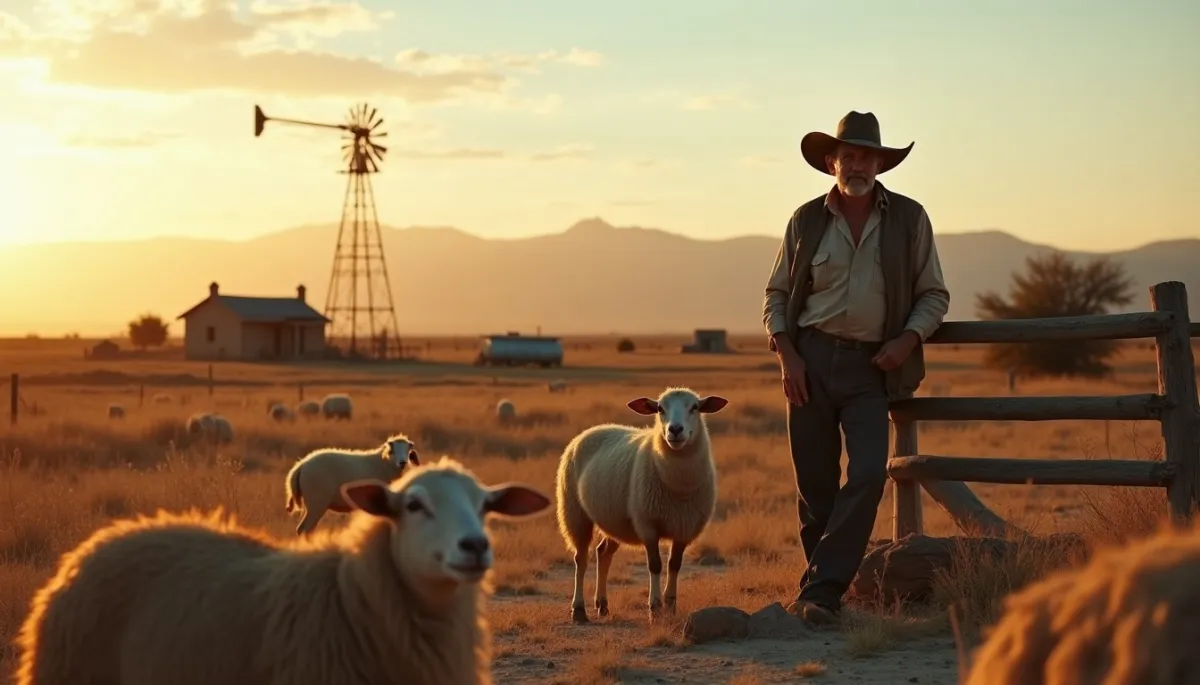
At sunrise a herdsman cups his hand and tastes the wind. The landscape around Beaufort West rolls like an ocean of low scrub and pale stone, where sheep and karakul-bellies dot the slopes and old windmills creak over dry pans. The air smells of dust, sun-heated wool and diesel from a distant tractor. It feels at once ancient and precariously modern.
Terre de laine
The Karoo (from a Khoisan word meaning roughly "land of thirst") stretches across the central and western half of South Africa. Historically, the Great Karoo and Little Karoo became synonymous with wool. From the late 18th century, British and Afrikaner farmers introduced and bred Merino sheep, and by the mid-19th century a wool boom had reshaped towns like Graaff-Reinet (founded 1786) and Beaufort West (established 1818).
Wool fortunes built homesteads and churches, while the landscape bore the marks of fences, stock routes and boreholes. In literature, Olive Schreiner set "The Story of an African Farm" (1883) in this very veld, fixing the Karoo in cultural memory as place of harsh beauty and moral testing.
Concrete facts: the Karoo wool economy peaked in the late 19th century and repeated cycles of boom and bust followed. Sheep counts fell and rose with markets, disease outbreaks such as sheep scab, and the introduction of new breeds adapted to arid conditions.
Racines brûlées
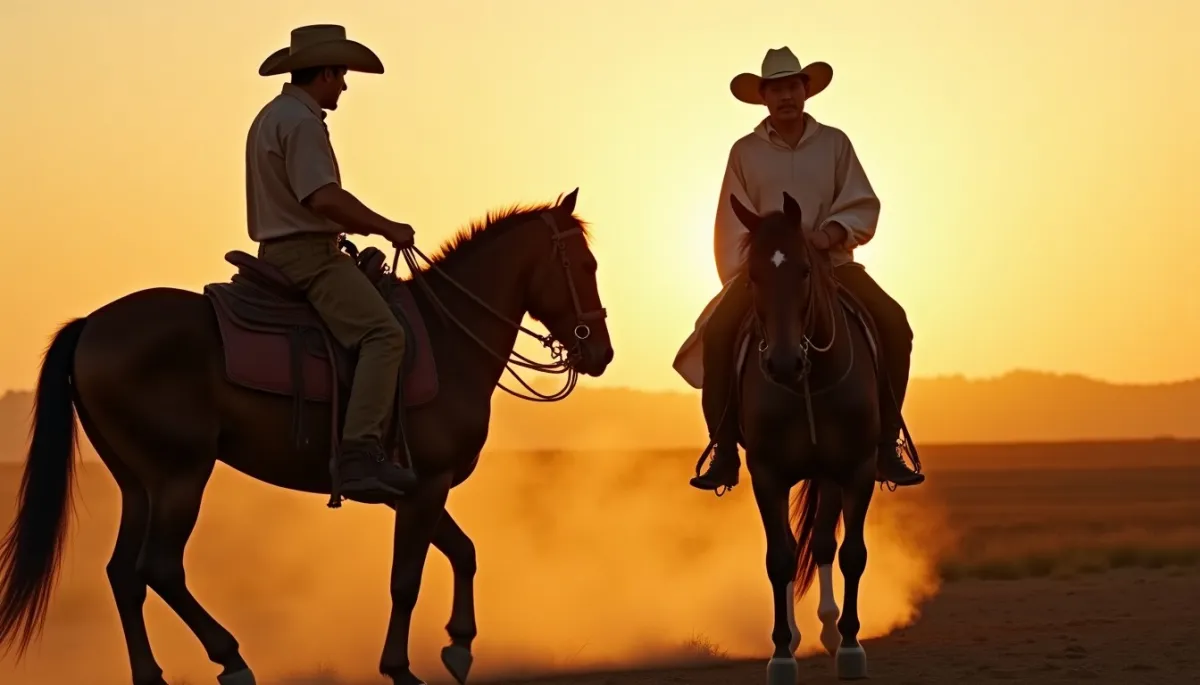
Farmers in the Karoo are the region's cowboys: often Afrikaner or mixed-descended stockmen who manage vast properties called farms. Their livelihoods depend on scarce water, variable rains and the carrying capacity of the veld (the South African term for open grassland).
Why do they persist? Partly because of history, partly because stock and land are family capital passed across generations. The cause of current tensions lies in climate variability and economics. Between 2015 and 2018, the Western Cape experienced one of its worst droughts in living memory, and the Karoo felt the ripple effects through shrinking pastures and rising costs for borehole drilling and feed.
Adaptation has a clear date-stamp: during the 20th century, breeders created the Dorper, around the 1930s, combining Dorset Horn and Blackhead Persian genetics to produce a hardy meat sheep that tolerates arid conditions—an innovation now ubiquitous on Karoo farms. Producers also embraced boreholes, windmills and water tanks to supplement erratic rainfall.
Fermes en mutation
Yet survival is not only technical. Many Karoo farmers diversify. Since the late 20th century, game farming (raising springbok, eland, and gemsbok), eco-tourism with guesthouses and 4x4 trails, and renewable energy projects have supplemented income. Karoo National Park, established in 1979, exemplifies a shift toward conservation as an economic lever.
The contradictions are palpable. Large-scale solar and wind projects promise jobs and revenue, but can also stir conflict over land use and visual impact. Younger farmers are experimenting with rotational grazing and resting paddocks to combat overgrazing, while NGOs promote veld rehabilitation and predator-livestock coexistence programs.
Practical advice for visitors and aspiring ranchers: respect the rhythm of the land. Travel in sturdy vehicles, ask permission before crossing farms, and learn local terms like "veld", "kraal" (livestock enclosure) and "borehole". For ranchers, techniques that work here include rotational grazing, water harvesting (contour ponds, dam lining), and investing in hardy breeds like Dorper and adapted Merino strains.
In the end the Karoo's cowboys teach a simple lesson: adaptation is daily, communal and inventive. Between the wool sheds and the wind farms, life in this semi-desert continues to be a negotiation with scarcity, and a story of stubborn, pragmatic hope.