The gardian tongue: Lexicon and expressions of the Rhône delta
The gardian tongue is a living echo of marshes, horses and cattle. In the Rhône delta, words carry work, weather and rites.
🚀 Key Takeaways
- Core concept: Many Camargue words are tied to horse and herd life (manade, gardian, abrivado).
- Practical tip: Hear the language during festivals in Arles and the Saintes-Maries-de-la-Mer pilgrimage.
- Did you know: Folco de Baroncelli helped shape modern Camargue identity in the early 20th century.
La voix des gardians vous saisit au tournant d'une manade.
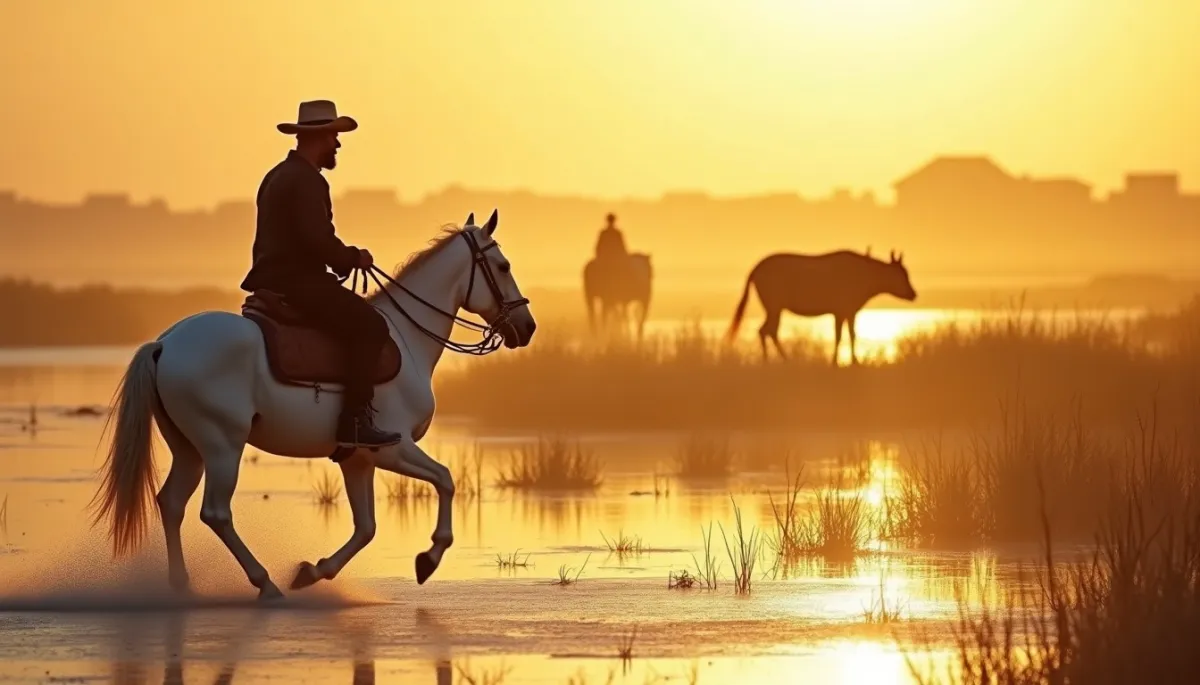
Imagine a low sun on salt flats, a small group of white Camargue horses, a gardian in dark vest and broad hat calling over reeds. A bull stirs, and a single word, abrivado, sets a chain of movement: horses launch, men shout, the herd flows like a river through the village streets. You feel the language as much as you hear it.
mots de la terre
The backbone of the gardian lexicon is the vocabulary of work. "Manade" (pronounced ma-nad) names a herd of cattle or horses raised free in the marshes. It also names the operation (the farm) and the community around it. A manadier (ma-na-dye) is both owner and keeper, a central figure in Camargue life.
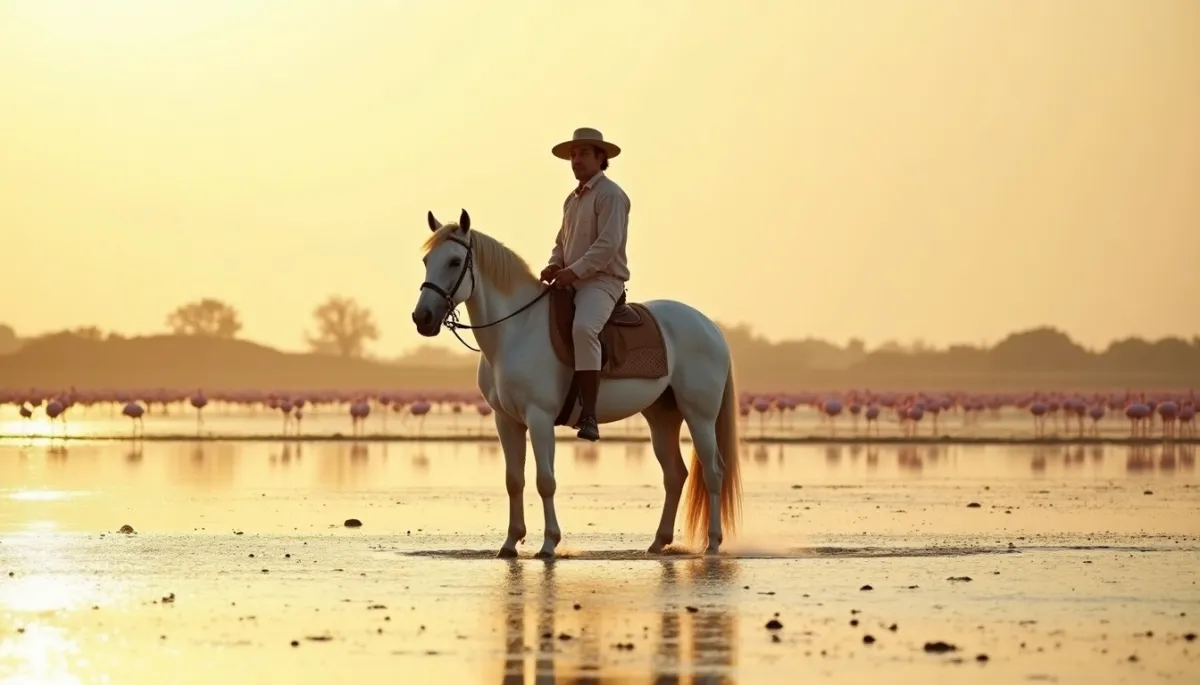
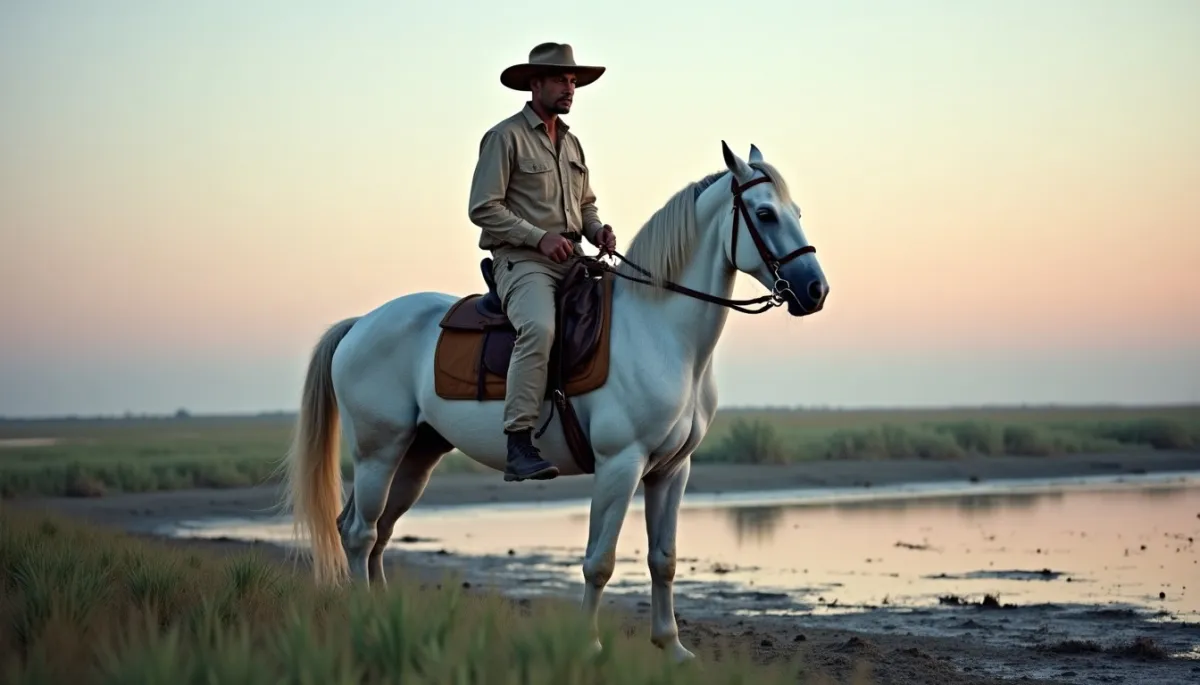
"Gardian" (gar-dyan) designates the mounted herdsman unique to the delta. Unlike the American cowboy or the Argentine gaucho, the gardian rides the small, tough Camargue horse (often grey) and works in wetlands. Their tools and calls reflect that habitat: booted legs, wide-brimmed hats, and short rein work suited to sudden turns between reeds.
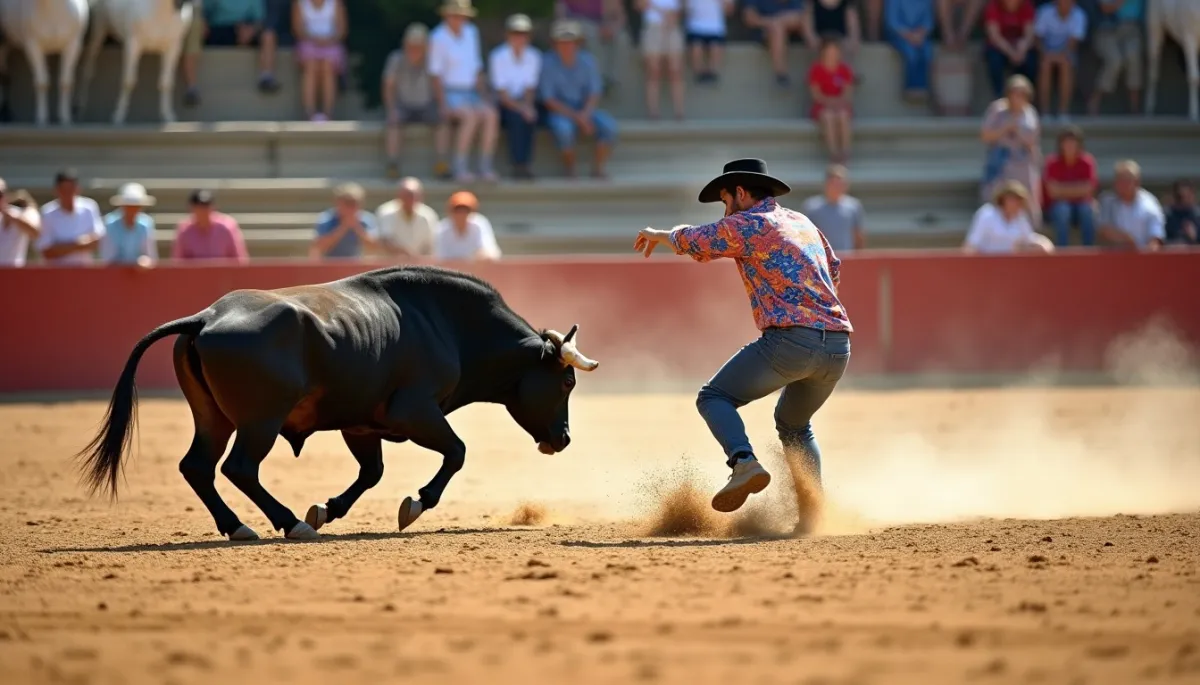
Other staple words: "abrivado" (a-bree-va-do) for the fast driving of bulls through town; "bandido" (ban-dee-do) for their release back to the manade; "raseteur" for the participant in course camarguaise who snatches a rosette from a bull (this sport was codified around the late 19th and early 20th centuries). These terms are markers of communal ritual, not just vocabulary.
voix et histoire
Words in the Camargue carry history. Folco de Baroncelli-Javon (1869-1943) is a name you will hear. Writer and manadier, he championed Provencal language and the gardian tradition in the early 20th century, organizing fêtes that helped make the abrivado and the image of the gardian central to regional identity.
The Parc naturel régional de Camargue, created in 1970, placed further value on these living practices. Protection of wetlands meant protection of livelihoods, and the lexicon tied to that life kept circulating in schools, fêtes and manades. Place names like Arles and Saintes-Maries-de-la-Mer became stages for words to be performed each year during pilgrimages and bull-running events.
Anecdotes anchor vocabulary. In 1932 a famous manade organized an abrivado that reportedly lasted into the night and brought the whole town together; older gardians still recall the exact shout patterns used to guide cattle through narrow streets. Oral transmission remains key: pronunciation, intonation, and specific calls are taught on horseback, not in dictionaries.
parler aujourd'hui
The language faces tensions. Modern tourism and television images of the Camargue can flatten nuance into postcard clichés. Yet many manadiers resist commodification: they open doors for visitors but insist on showing work, not a staged spectacle. Learning a few words (try saying "manade" or "abrivado") goes a long way in conversations.
You will also hear borrowings and neologisms. Younger gardians mix French with Provençal expressions (Occitan), and terms from international equestrianism. For example, "entraide" (mutual help) remains a practical value and a term used during large round-ups, while social media has introduced hashtags but also revived old recordings of Folco's speeches.
Practical advice: go during a local feria or the May pilgrimage to Saintes-Maries-de-la-Mer to hear authentic usage. Visit the Musée de la Camargue in the Parc naturel to contextualize words with objects. Ask permission before entering a manade, respect rhythms of work, and favor listening over filming. The best learning is done alongside a gardian, hand-to-rein.
The gardian tongue is not a museum piece. It is a language braided with work, weather and community. Learning even a few terms opens a window into a landscape where every word has the salt of the marsh and the dust of the track.