The simbeù: the lead bull's role in Camargue herds
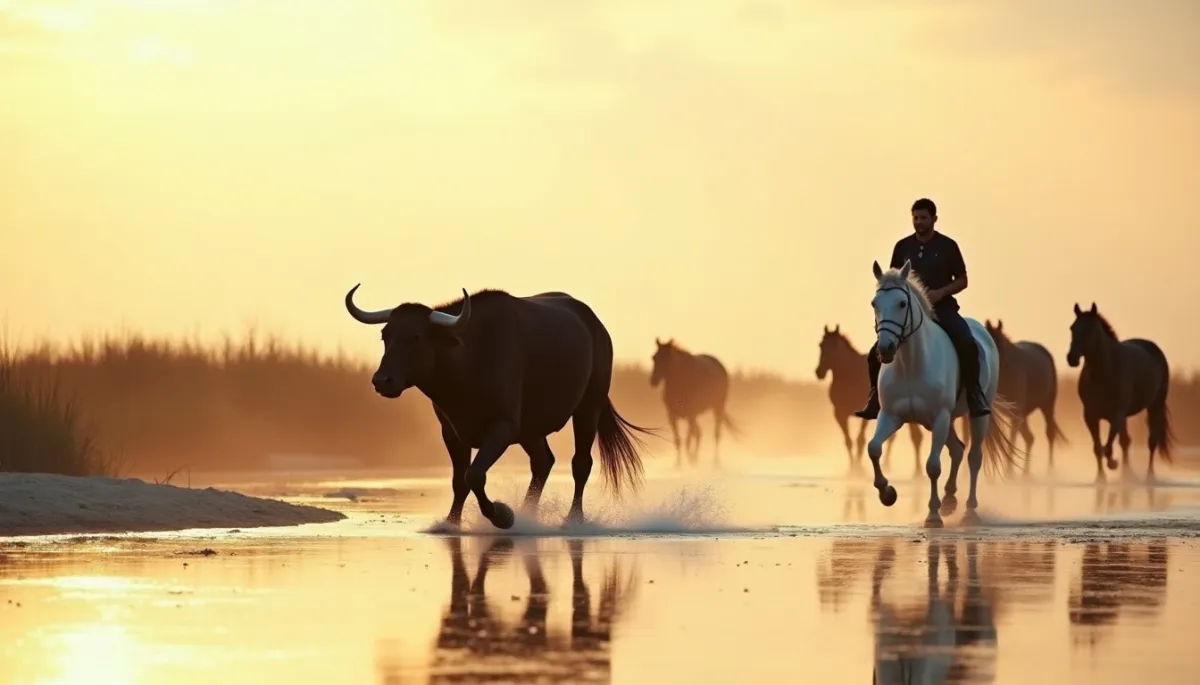
In the salt light of the Camargue, one bull decides the pace. The simbeù is more than a dominant animal; he is a living compass for the manade and its gardians.
🚀 Key Takeaways
- Key concept : The simbeù is the lead bull in Camargue herds, recognized by gardians for his guiding behaviour.
- Practical tip : Observe from a safe distance and follow the gardian's instructions during abrivados and moves.
- Did you know : Folco de Baroncelli helped institutionalize Camargue traditions in the early 20th century, shaping how manades are seen today.
Silence. Then a low, commanding snort.
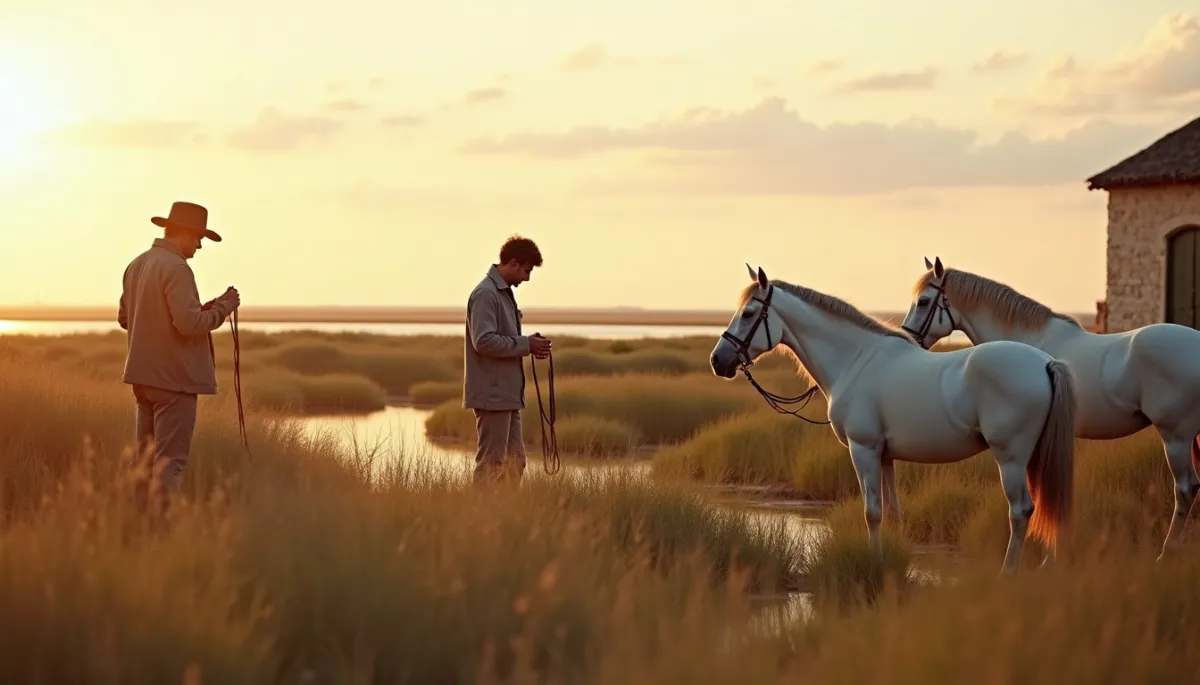
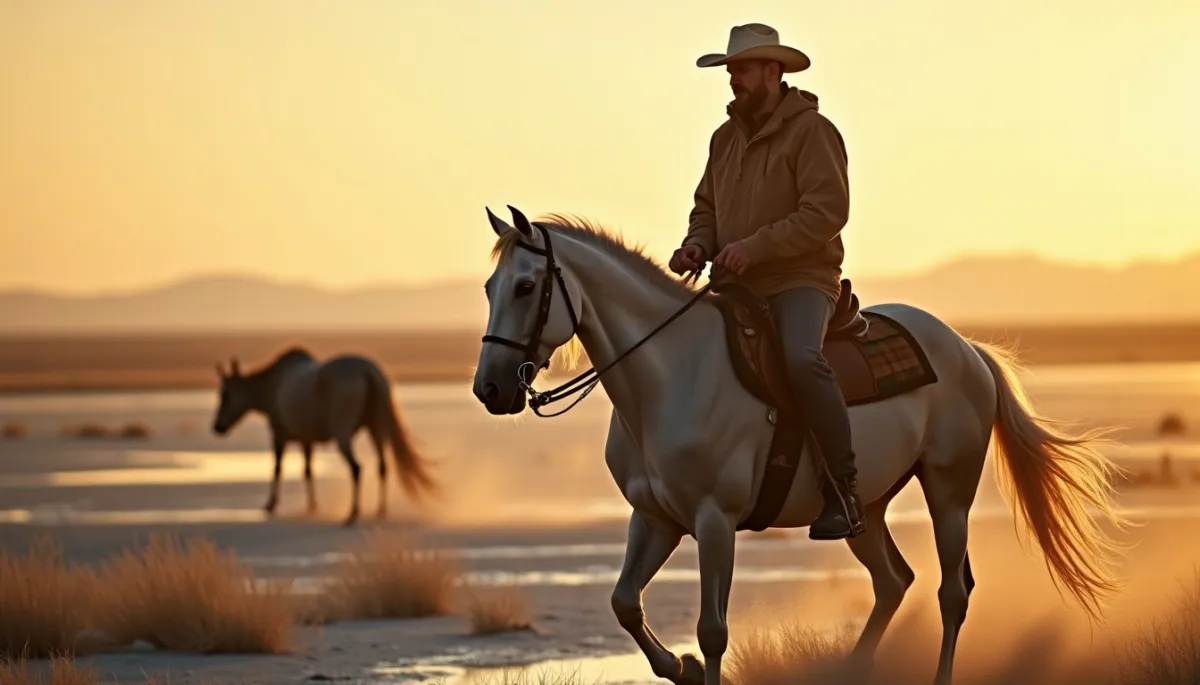
The marsh opens, flat and silver; a dark bull walks at the front, horns curved like a guardian crescent. A gardian on a white Camargue horse keeps the flank, ready. You can feel how the herd reads that bull: calves step in the same measure, cows shift, and even the wind seems to follow the line he draws across the salt.
The chief in the herd
The simbeù is the bull that other cattle accept as leader. In the Camargue, herds (manades) are managed by manadiers and their gardians, and among the bulls one will naturally take on the role of guide. This is not a title on paper, but an acknowledged position created by behaviour, age and temperament.
Gardians name and respect the simbeù because his choices influence group safety. During a crossing of the rice fields or a narrow passage between reed beds, the herd will follow the simbeù's route. That practical leadership reduces stress and limits dangerous separations.
Historically, the manade system—herds raised for work and for traditional events—has relied on these unspoken leaders. Folco de Baroncelli, who from 1909 promoted the gardian culture through the Nacioun Gardiano, described the subtle authority some bulls held in the marshes; archives and oral histories confirm the centrality of lead animals in herd cohesion.
Roots and instincts
Why does a simbeù emerge? Biology and social learning combine. Bulls show dominance through posture, horn presentation, and scent marking. A bull that demonstrates calm in difficult terrain, or clear decisions when predators or storms threaten, becomes a reference point.
Many manades are family operations that pass down knowledge. Experienced manadiers know to watch interactions: a younger bull that yields to an older, steady individual is showing the hierarchy. Over seasons, the manadier will test and often let the herd confirm who leads, intervening only when necessary for safety or breeding control.
Environmental pressures shape behaviour too. The Camargue is a mosaic of marsh, lagoon and saline plains. In 1970, the creation of the Parc naturel régional de Camargue formalized protections for landscapes and traditional husbandry. In this fragile setting, a calm simbeù helps a herd navigate tidal channels and salt pans with fewer losses.
Rituals, risks and futures
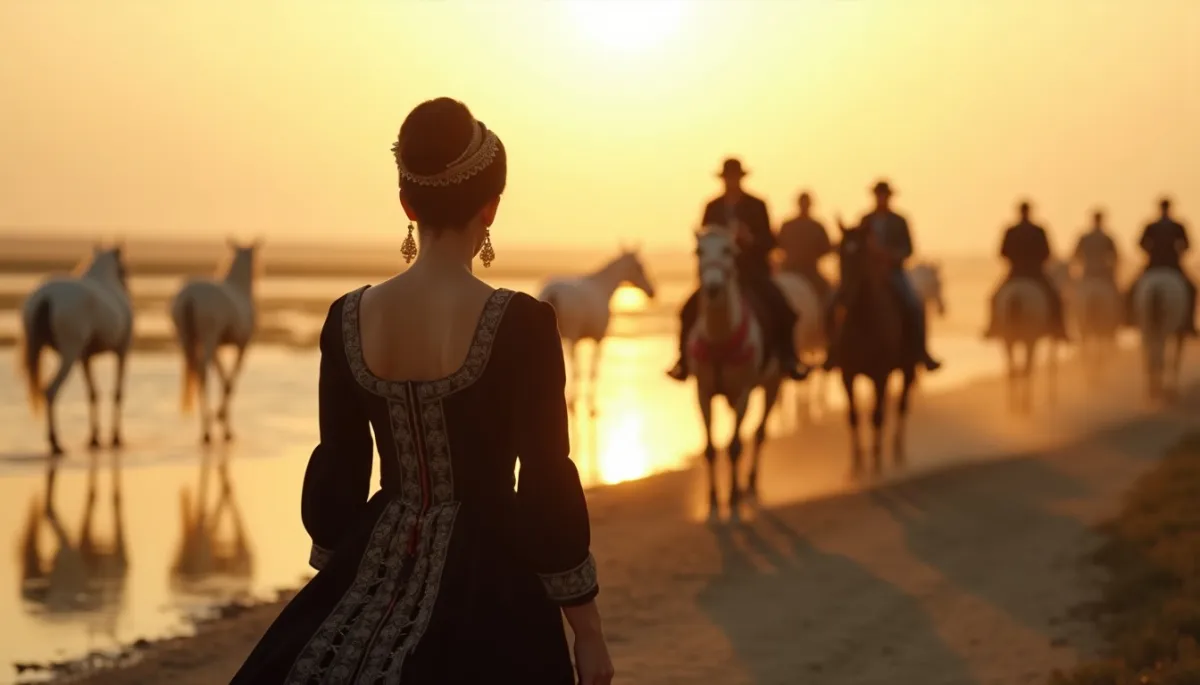
Recognizing the simbeù is also cultural. At events such as the Feria d'Arles or local fêtes, manades drive bulls through town in abrivados and bandidos. The lead bull's behaviour can make the difference between a smooth passage and chaos. Gardians train horses and riders to read and respect that animal's signals.
However, tensions exist. Modern constraints—tourism pressure, stricter animal movement rules, and breeding selection—can modify herd dynamics. Some manadiers breed for temperaments suited to spectacle, which may alter the natural emergence of a simbeù. Conservationists and traditionalists debate how to keep authenticity without compromising safety.
For visitors who want to learn, simple rules apply. Attend a manade visit or an abrivado with a guide, never approach a herd on foot without permission, and remember the gardian's authority. Watching a simbeù in motion is to read a living map of the Camargue, where tradition, ecology and instinct meet.
Glossary: manade (herd managed for grazing and events), gardian (Camargue mounted herder), abrivado (the traditional run that brings bulls through a street or arena), simbeù (local name for the lead bull; pronounced sim-bay-oo).