Wildlife of the French Far West: Pink flamingos, black bulls and white horses
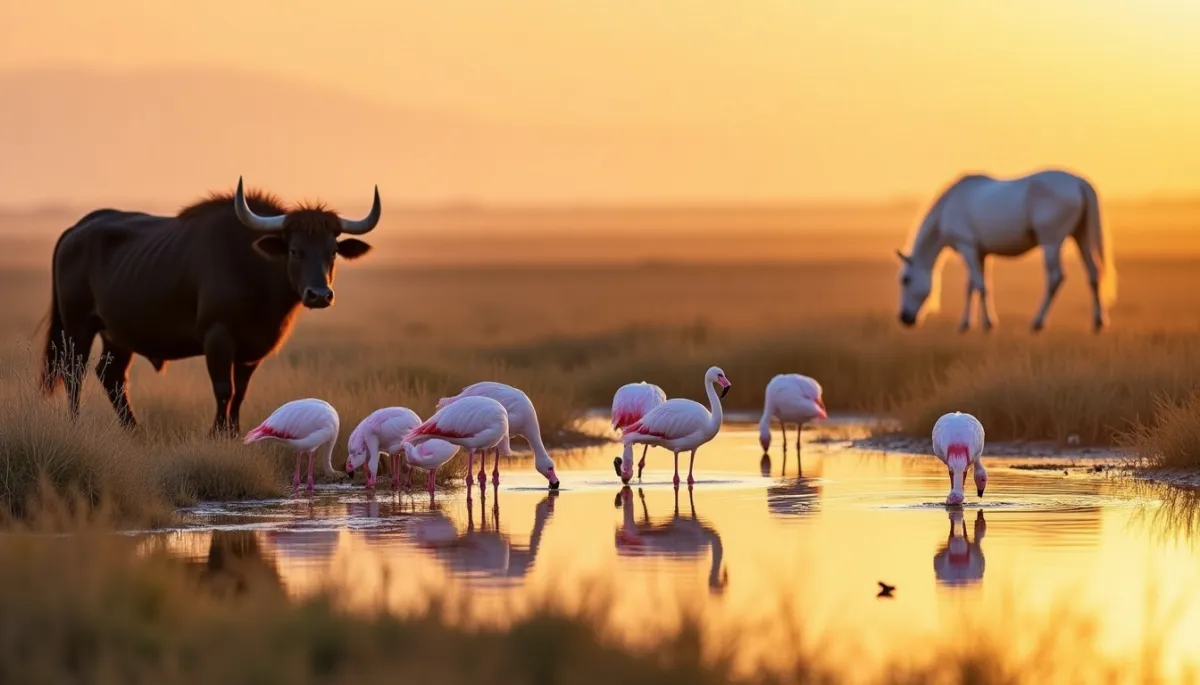
The Camargue is a theatre where nature and tradition perform together. From the shimmering pink flocks to the low-slung black bulls and the chalk-white horses, this delta has a personality all its own.
🚀 Key Takeaways
- Key concept : The Camargue hosts three emblematic species, each shaped by salt, water and human husbandry.
- Practical tip : Best sightings in spring and autumn around Pont de Gau, Étang de Vaccarès and Saintes-Maries-de-la-Mer, bring binoculars and stay on trails.
- Did you know : Local traditions like the course camarguaise keep bulls alive, while gardians maintain ancient herd systems (manades).
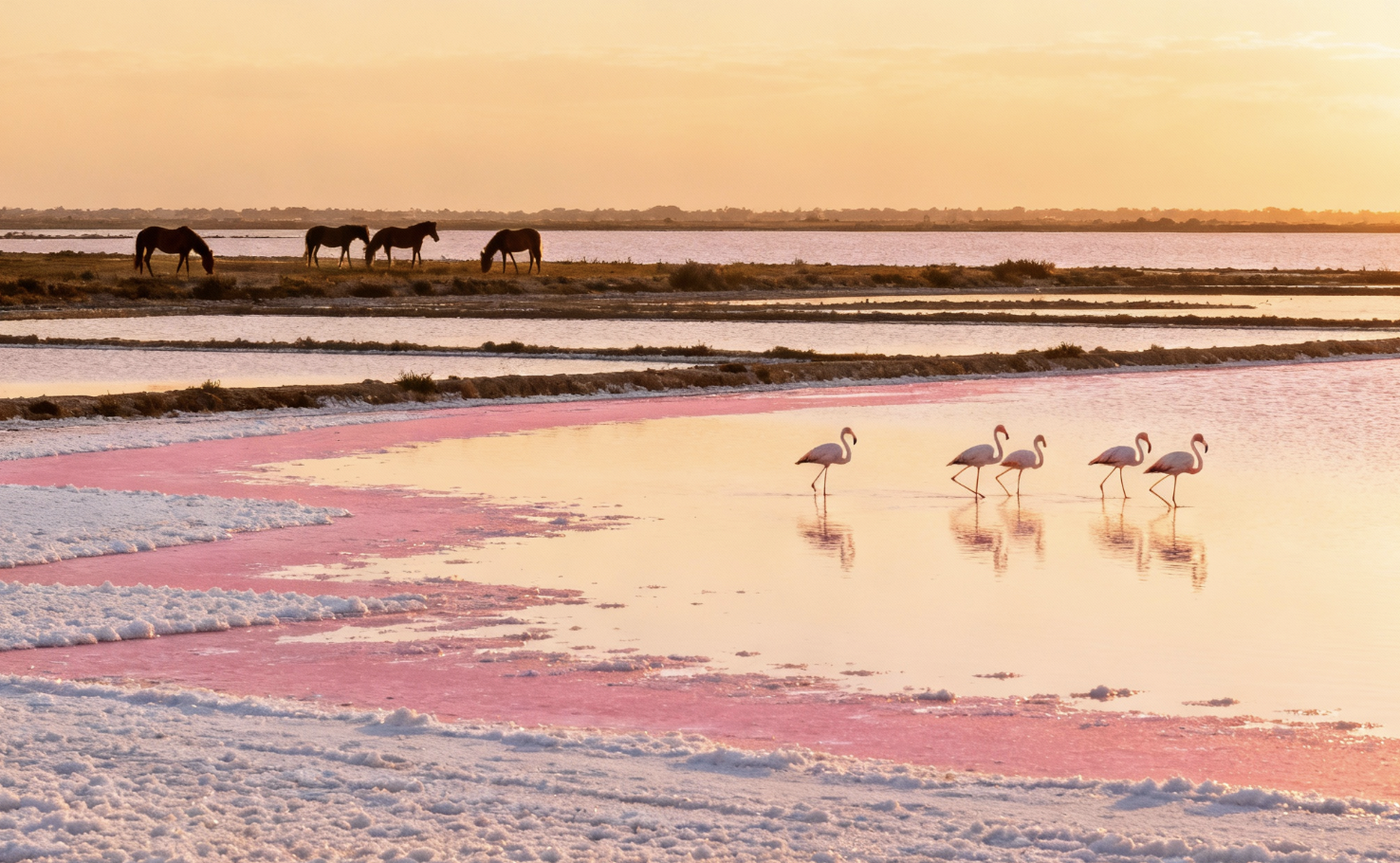
Light pours across a salt marsh, painting a ballet of pink wings and white flanks.
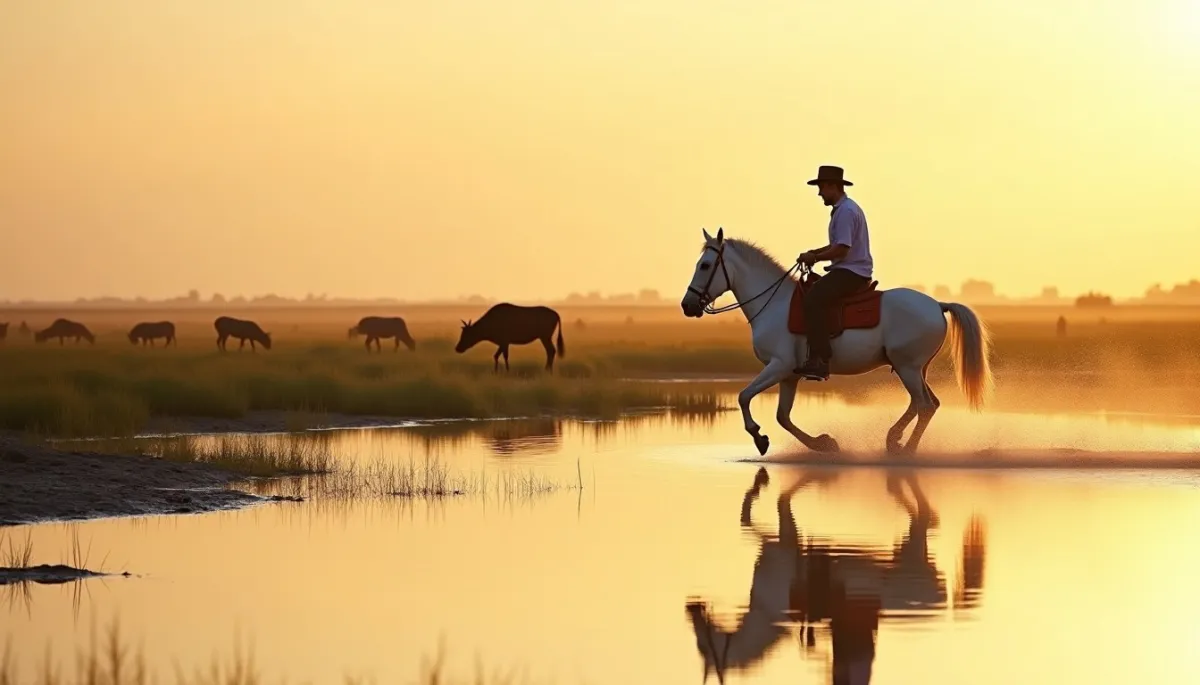
In the warm hush of dawn, a flight of greater flamingos wheels above shallow lagoons, while a herd of Camargue horses grazes near a pool, and a cluster of black bulls rests under a tamarisk. The air tastes of brine and cut grass, and the rhythm of the place is measured by tides, salt pans and the cadence of the gardians' horses.
L'âme rose
The greater flamingo (Phoenicopterus roseus) is the most visible face of Camargue wildlife. Colonies gather on mudflats and shallow lagoons, nesting on small mounds of mud and vegetation.
Large concentrations can be observed around the Étang de Vaccarès and at the ornithological reserve of Pont de Gau, where hides and trails allow respectful observation. Flamingos feed by filtering brine shrimp and tiny algae, pigments that tint their feathers pink.
Historically, flamingo numbers fluctuated with land use and wetland drainage, but protection efforts after the 1970s, including the creation of the Parc naturel régional de Camargue in 1970 and the Réserve naturelle in the early 1970s, improved breeding prospects. Today, colonies return to breed most springs, a fragile success tied to water management and climate patterns.
Colères noires
The Camargue bull is small, black and compact, bred for rusticity and temperament. It is not raised for slaughter in the tradition of bloodless games, instead it is celebrated in spectacles like the course camarguaise, where raseteurs attempt to snatch a rosette from the bull's horns.
Bull breeding is organized in manades, traditional free-range herds tended by gardians. These herders ride Camargue horses, use long wooden tridents called camarguais sticks for handling, and follow seasonal rounds across marshes and pastures. The manade model links animal management to landscape conservation.
Figures such as Folco de Baroncelli-Javon (1869-1943) played a decisive role in reviving local identity, promoting traditional herding and festivities in the early 20th century. The bull's cultural status is therefore inseparable from regional festivals, notably the Feria of Saintes-Maries-de-la-Mer each May, where animals and people meet in ritual and pageantry.
Crinières blanches
The Camargue horse, often called the white horse although foals are born dark, is adapted to marshy ground and variable forage. Agile and enduring, it is the working tool of the gardian, as essential to the manade as the bull itself.
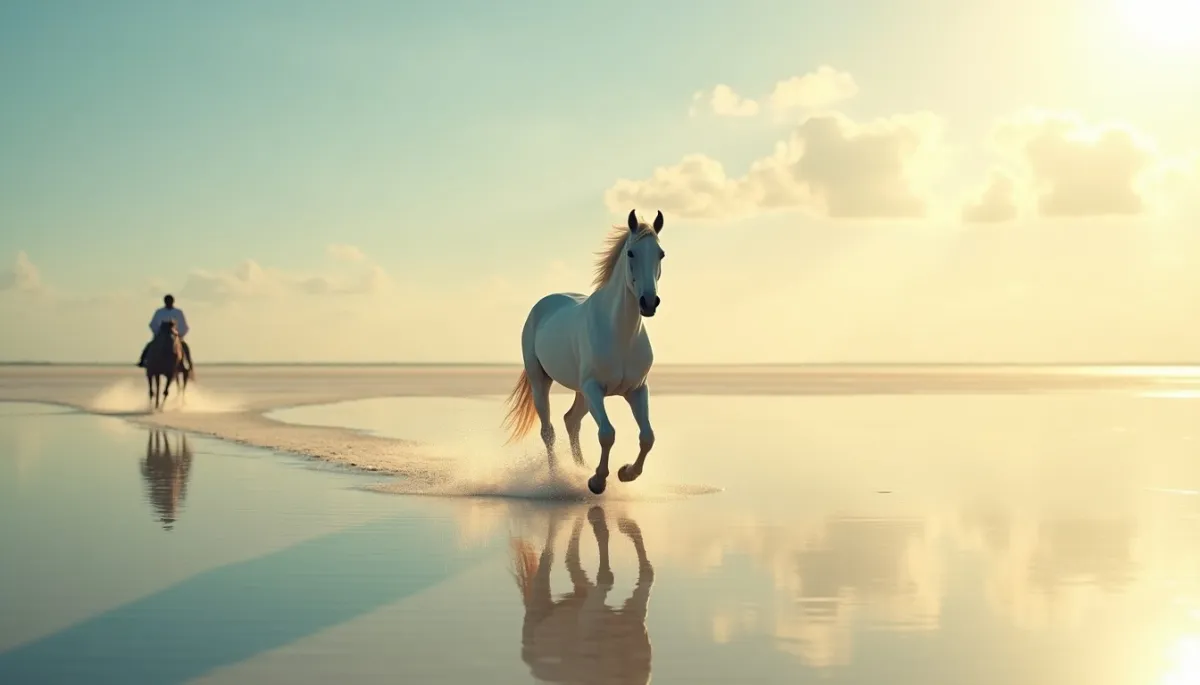
Horses are kept semi-feral on the salt meadows and reed beds, their coats lightening with age. They are central to local identity and tourist imagery, appearing in postcards and horseback rides along the beaches near Saintes-Maries-de-la-Mer.
However, pressures are mounting. Rising temperatures, altered water regimes from upstream damming, tourism, and land conversion for salt extraction or solar projects create tensions between conservation, agriculture and development. Maintaining the triad flamingo-bull-horse requires careful management and continued commitment from local communities.
Sel, marais, futur
Conservation in Camargue has a layered history. The regional park of 1970 set a framework, while reserve status protected breeding sites, yet the landscape remains dynamic and contested. Salt works and rice paddies shape habitats, sometimes benefiting birds, sometimes fragmenting them.
Practical measures have made a difference: timed water releases to preserve shallow feeding grounds, limits on motorized access in sensitive zones, and manade regulations that keep grazing compatible with nesting. Citizen science, led by local ornithologists and associations, also helps track populations seasonally.
For visitors, a few rules preserve the experience: stay on marked paths, respect distance around nests, avoid flash photography during breeding seasons, and prefer guided outings with local gardians or naturalists to learn the customs and the hidden rules of the marsh.
Rites et raisons
The Camargue is a cultural landscape, where human practices have shaped ecological outcomes. The manade system, the course camarguaise and the gardian tradition have conserved large wetlands by keeping them in pastoral use instead of converting them to intensive agriculture.
Yet contradictions persist. Economic needs push for projects that may alter hydrology, and climate change increases drought frequency, forcing managers to choose which ponds to keep wet. Such choices determine whether flamingos find food, whether horses have grazing, and whether bulls can continue to be reared in free-range conditions.
Ultimately, the survival of these emblematic species depends on a mix of law, local know-how and visitor respect. If you come to the Far West of France, look, listen and let the marsh speak. The best souvenir is a memory, not a photograph taken too close.