Saintes-Maries-de-la-Mer: equestrian and spiritual capital of the Camargue
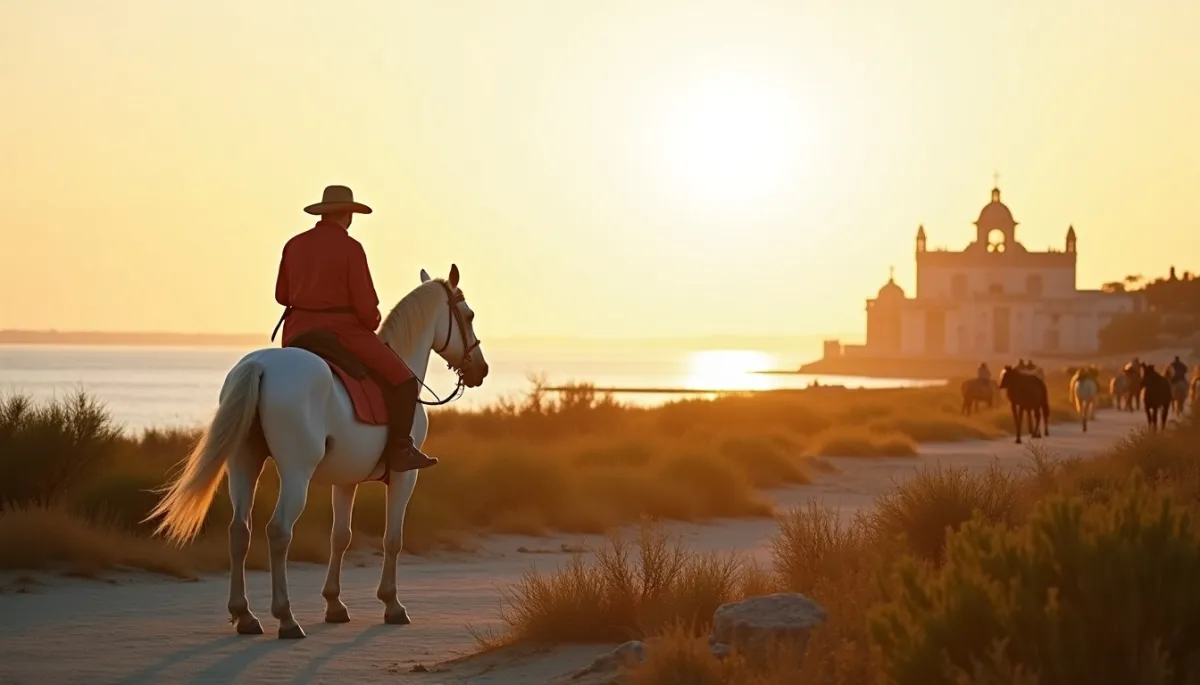
Les Saintes-Maries-de-la-Mer sits at the edge of the Rhône delta, where salt, sea and horses shape a culture. In late May the town becomes a moving pilgrimage, and year-round it remains the heart of Camargue equestrian life.
🚀 Key Takeaways
- Key concept : Les Saintes-Maries-de-la-Mer is both a spiritual pilgrimage site and the living center of Camargue equestrian traditions.
- Practical tip : Visit early morning to watch gardians at work, and book stays for the May pilgrimage well in advance.
- Did you know : The town celebrates Saint Sara and the two Marys each May, attracting Romani communities from across Europe.
Light, wind, and the snort of horses.
Imagine a square paved with worn stones, the sound of footsteps mixing with distant bells, and horses—white, muscular, covered in salt dust—lined against the fortified church. Gardians in blue shirts and wide-brimmed hats mend ropes, whisper to their mounts, and prepare for an abrivado, the thrilling run of bulls through the streets. The sea smells of iodine, and a procession will soon carry a black wooden statue across the sand, a ritual that has tied sea, faith, and equestrian craft here for centuries.
Terre et sel
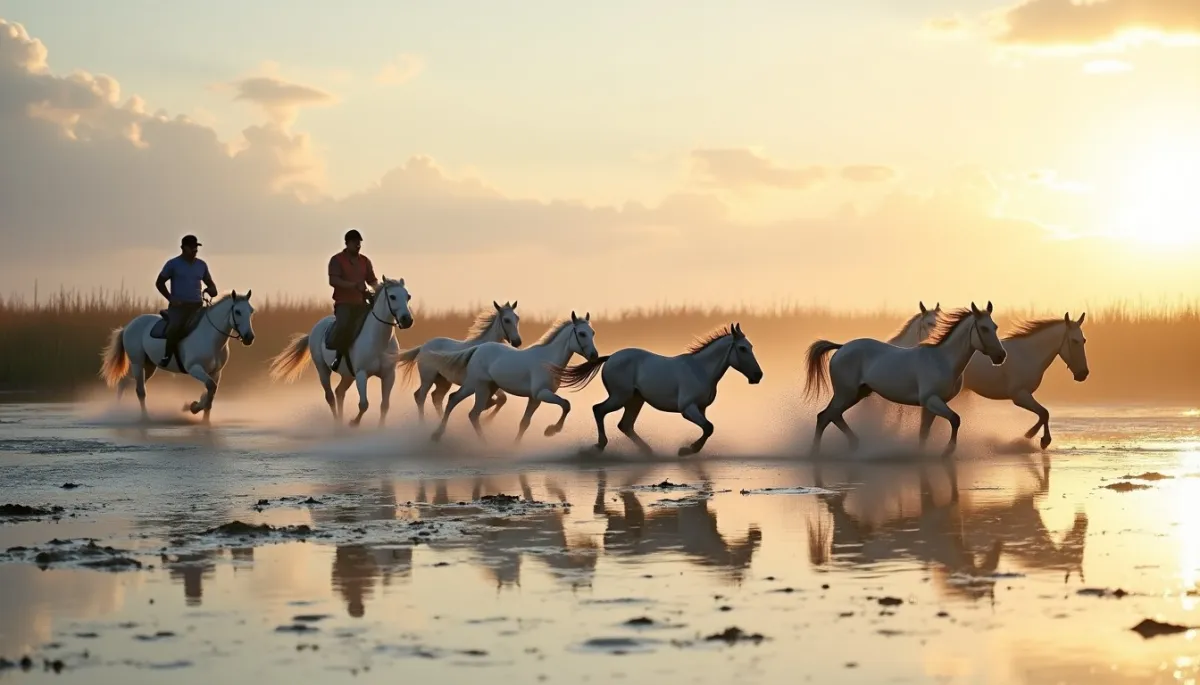
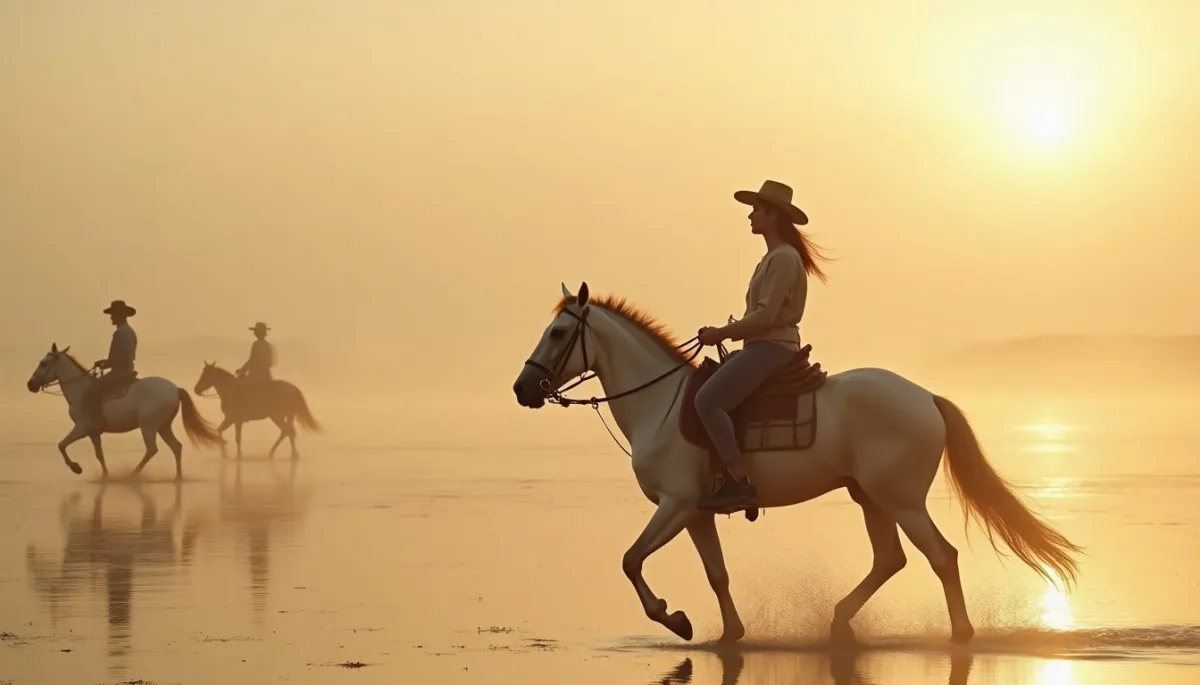
Les Saintes-Maries-de-la-Mer sits where the Camargue marshes meet the Mediterranean. The landscape defines everything: saline flats, reed beds, and tamarisk trees force both horses and riders to adapt. The local horse, the Camargue horse, is small, hardy and usually grey. It has evolved to pick its way through silt and salt, patient and sure-footed.
The town itself grew around a fortified church, long used as refuge from pirates and floods. That building, looming over the quay, holds the relics and statues that make the place a pilgrimage destination each May, when thousands of visitors and Romani groups come to honor Saint Sara and the two Marys.
Equestrian life here is visible every day. Manades, the semi-wild herds of horses and bulls, graze the marshes. Gardians manage them from horseback, using long tridents called tridents de gardian and ropes, while the ferrade, a traditional branding and round-up, punctuates seasonal rhythms. These practices are living heritage, practical and ceremonial at once.
Gardiens et saints
Who are the main figures? The gardians are the local cowboys of the Camargue. They ride, work and live with their herds. Names like Folco de Baroncelli-Javon (1869-1943) still resonate; he was an early advocate of Camargue traditions, promoting festivals and protecting local breeds. His efforts helped shape the image of the gardian as a cultural guardian, not just a worker.
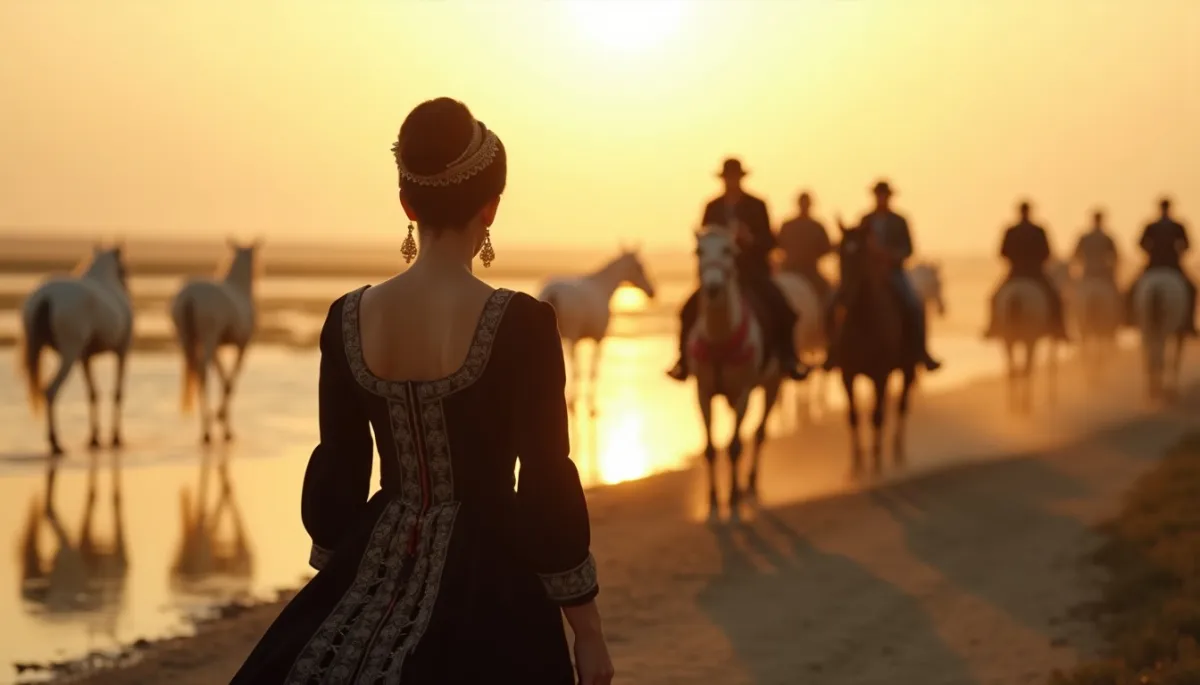
On the spiritual side, Les Saintes-Maries honor Marie Jacobé and Marie Salomé, and above all Saint Sara, or Sara la Kali, the patron saint of the Roma. Every year around May 24th, the pilgrimage culminates in a sea procession where the statue of Saint Sara is carried into the waves. The ceremony mixes Catholic liturgy, Romani chants, and popular devotion in a rare, colourful convergence.
Local organizers, manadiers (manade owners) and clergy work together to keep both strands alive. Bull games like the abrivado or the course camarguaise (a bloodless bull-leaping practice) are not mere spectacle; they are moments where animal husbandry, skillful horsemanship and communal identity meet in public life.
Anecdotes et dates
In 1932, Folco de Baroncelli-Javon established cultural gatherings that later inspired modern Camargue festivals. The pilgrimage, older and less documentable, was described by travellers from the 15th century onwards, but it took a recognizable modern form in the 19th and 20th centuries as transport improved and Romani communities could travel more widely.
A memorable image: in the 1960s, photographers and filmmakers began to fix an iconography of white horses against red marshes, a visual shorthand that helped sell the myth of Camargue worldwide. Yet behind the postcards, daily life remained rough and pragmatic: salt harvesters, shepherds and gardians sharing work and festivities.
Today, Les Saintes balance tourism and tradition. The August feria draws aficionados of bull culture, while spring pilgrimage remains a solemn, vibrant moment. Local manades sometimes offer guided rides or ferrade demonstrations, practical ways for visitors to witness traditions respectfully.
Tensions et avenir
All is not without friction. Tourism brings money but pressures fragile wetlands and alters rhythms. Some locals worry that staged spectacles replace authentic practices, while others embrace new audiences as a way to preserve livelihoods and funding for conservation.
Climate change and rising sea levels are concrete threats. The delta’s shifting sediments and occasional violent storms force adaptations in herd management and infrastructure. Manades move grazing areas, and community associations lobby for protective measures to conserve marshes and salt flats.
Still, innovation and preservation coexist. Schools teach horse-handling skills, associations maintain archives of songs and rituals, and the manade system adapts with veterinary care and herd registries. Visiting Les Saintes today is to see both a living tradition and a community negotiating its future.
Practical advice: arrive at dawn to see the gardians, respect animals during events, book accommodations for late May and August far ahead, and, if possible, join a guided manade visit to understand the balance between work, ritual and landscape.